

Vitamin K2: The Essential Guide to Benefits, Sources & How It Supports Your Health
Discover the often-overlooked nutrient that helps direct calcium exactly where your body needs it – and keeps it away from where it doesn’t.
Editorial Disclosure: This article provides general educational information and is not intended as medical advice. Individual needs vary. Always consult with a qualified healthcare professional before making changes to your diet or starting any supplement regimen.
🎯 Key Takeaways
- ✓ Vitamin K2 directs calcium to your bones and teeth whilst helping prevent deposits in arteries and soft tissues.
- ✓ Two main forms exist: MK-4 (from animal foods) and MK-7 (from fermented foods like natto), with MK-7 staying active in the body longer.
- ✓ Research links adequate K2 intake to improved bone density, reduced fracture risk, and better cardiovascular health.
- ✓ Pairing K2 with Vitamin D3 may enhance benefits, as D3 increases calcium absorption whilst K2 ensures proper utilisation.

📚 Introduction
You’ve probably heard plenty about Vitamin D for bone health and Vitamin C for immunity. But there’s another vitamin that’s been quietly working behind the scenes – and it might just be the missing piece in your health puzzle. Meet Vitamin K2, a nutrient that’s finally getting the attention it deserves.
Here’s the thing: whilst Vitamin K1 (found in leafy greens) is essential for blood clotting, Vitamin K2 has an entirely different job. It acts like a traffic controller for calcium in your body, directing it to where it’s needed – your bones and teeth – whilst keeping it away from places it shouldn’t be, like your arteries and kidneys.
In this comprehensive guide, we’ll explore what Vitamin K2 actually does, why so many people may not be getting enough, and how you can optimise your intake through food and, if appropriate, supplementation. Whether you’re concerned about bone health, heart health, or simply want to understand this nutrient better, you’re in the right place.
🔬 What Is Vitamin K2?
Vitamin K2, also known as menaquinone, is one of two main forms of Vitamin K. Unlike K1, which your body uses primarily for blood clotting, K2 specialises in regulating calcium metabolism. It activates specific proteins that control where calcium ends up in your body – a rather crucial job when you think about it.
What makes K2 particularly interesting is that it comes in several subtypes, distinguished by the length of their molecular side chains. The two most researched and commonly discussed are MK-4 and MK-7. Each has unique characteristics that affect how your body absorbs and uses them.
| Characteristic | MK-4 | MK-7 |
|---|---|---|
| Primary Sources | Animal products (meat, eggs, dairy) | Fermented foods (especially natto) |
| Half-life in Body | 1-2 hours (short) | 2-3 days (long) |
| Dosing Frequency | Multiple times daily for effect | Once daily is sufficient |
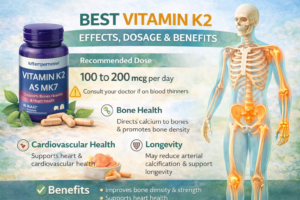
| Typical Supplement Dose | 500-1000 mcg | 100-200 mcg |
The longer half-life of MK-7 means it builds up to higher, more stable levels in your blood, making it particularly effective for maintaining consistent K2 activity. This is why MK-7 has become the preferred form in most supplements, though both forms have their place in a well-rounded diet.
⚙️ How Vitamin K2 Works in Your Body
Vitamin K2’s superpower lies in its ability to activate specific proteins through a process called carboxylation. Without K2, these proteins remain inactive and can’t perform their essential functions. Think of K2 as the key that unlocks these proteins’ potential.
Key Proteins Activated by Vitamin K2:
- Osteocalcin: Once activated, this protein binds calcium and incorporates it into your bone matrix, strengthening bone structure and density.
- Matrix Gla Protein (MGP): This protein acts as a powerful inhibitor of arterial calcification, helping keep your blood vessels flexible and clear.
- Growth Arrest-Specific 6 (Gas6): Involved in cell growth regulation, brain health, and may play a role in reducing inflammation.
Here’s where it gets really interesting: when you take Vitamin D3, it increases calcium absorption from your gut. Brilliant for getting more calcium into your system – but where does all that calcium go? This is precisely where K2 becomes crucial. It ensures the calcium you absorb actually strengthens your bones rather than depositing in your arteries.
Without adequate K2, a significant portion of osteocalcin and MGP remains inactive (undercarboxylated). Research has shown that undercarboxylated osteocalcin is associated with lower bone mineral density, whilst undercarboxylated MGP is linked to increased cardiovascular calcification risk.
✨ Key Health Benefits
The research on Vitamin K2 has expanded significantly over the past two decades, revealing benefits that extend well beyond its basic calcium-directing role. Here are the most well-supported benefits:
1. Supports Strong Bones and Reduces Fracture Risk
By activating osteocalcin, Vitamin K2 helps bind calcium to your bone matrix, improving bone mineral density. Studies, particularly from Japan where K2 is used as an osteoporosis treatment, show significant reductions in vertebral, hip, and non-vertebral fractures with adequate K2 intake. This is especially relevant for postmenopausal women and older adults.
2. Promotes Cardiovascular Health
Arterial calcification is a significant risk factor for heart disease. K2 activates Matrix Gla Protein, which inhibits calcium from depositing in arterial walls. The Rotterdam Study found that high K2 intake was associated with a 52% reduction in arterial calcification risk and a 57% lower risk of dying from heart disease.
3. May Support Dental Health
The same protein (osteocalcin) that directs calcium to bones also supports dental health. Adequate K2 may help maintain strong tooth enamel and support overall dental mineralisation. Historical observations by dentist Weston A. Price noted that traditional diets rich in K2 were associated with excellent dental health.
4. Works Synergistically with Vitamin D3
Vitamin D3 increases calcium absorption, but without K2, this calcium may not reach its intended destination. Taking D3 and K2 together appears to offer synergistic benefits – D3 gets calcium into your system, whilst K2 ensures it’s properly utilised. This combination may be particularly important for those taking high-dose Vitamin D.
5. Potential Benefits for Brain Health and Longevity
Emerging research suggests K2 may support brain health through its role in sphingolipid metabolism (important for brain cell membranes) and its anti-inflammatory properties via Gas6 protein activation. Some studies also link adequate K2 status to reduced all-cause mortality, though more research is needed.
⚠️ Deficiency and Risk Factors
Signs of Deficiency
K2 deficiency doesn’t typically cause obvious symptoms in the short term, making it a “silent” deficiency. However, over time, insufficient K2 may contribute to:
- • Decreased bone mineral density and increased fracture risk
- • Progressive arterial calcification and stiffening
- • Dental problems and cavities despite good oral hygiene
- • Easy bruising (though this is more related to K1)
- • Poor response to Vitamin D supplementation
Who May Be at Higher Risk?
- Those eating a Western diet: Modern diets are often low in K2-rich foods like organ meats, fermented foods, and grass-fed dairy – foods our ancestors consumed regularly.
- People with digestive disorders: Conditions affecting fat absorption (Crohn’s disease, coeliac disease, IBS) can impair K2 uptake since it’s a fat-soluble vitamin.
- Long-term antibiotic users: Some gut bacteria produce K2 (particularly MK-7 to MK-10), and prolonged antibiotic use may reduce this internal production.
- Older adults: Absorption efficiency decreases with age, and dietary intake often declines, creating a double disadvantage for K2 status.
💡 5 Practical Tips for Optimising Your Vitamin K2 Intake
💡 Tip 1: Include Fermented Foods Regularly
Natto (fermented soybeans) is the richest K2 source, containing approximately 1,000 mcg of MK-7 per 100g serving. If natto’s strong flavour isn’t for you, other fermented foods like aged cheeses (Gouda, Brie, Edam), sauerkraut, and kefir also provide K2, albeit in smaller amounts.
💡 Tip 2: Choose Grass-Fed and Pasture-Raised Products
Animals that eat grass convert the K1 in greens to K2, which then concentrates in their meat, eggs, and dairy. Grass-fed butter can contain up to 10 times more K2 than conventional butter. Look for labels like “grass-fed,” “pasture-raised,” or “free-range” when shopping.
💡 Tip 3: Take K2 Supplements with Fat
As a fat-soluble vitamin, K2 absorbs significantly better when consumed with dietary fat. Take your K2 supplement with a meal containing healthy fats – think avocado, olive oil, nuts, or fatty fish. This simple step can dramatically improve absorption.
💡 Tip 4: Consider a D3/K2 Combination Supplement
If you’re supplementing with Vitamin D3 (as many people in the UK should consider, especially in winter), look for a combined D3/K2 supplement. This ensures you’re getting both nutrients together, maximising the benefits of each. Typical effective doses are 1000-4000 IU D3 with 100-200 mcg K2 (as MK-7).
💡 Tip 5: Don’t Forget Egg Yolks and Organ Meats
Egg yolks (especially from pasture-raised hens) and organ meats like chicken liver are excellent MK-4 sources. Including 2-3 egg yolks daily or liver once a week can meaningfully boost your K2 intake. If you don’t fancy liver, try pâté or blend small amounts into mince dishes.
🔎 What the Research Shows
Scientific interest in Vitamin K2 has grown substantially since the early 2000s. Whilst we’re still learning about all its effects, several key studies have shaped our understanding:
📊 Research Highlights:
- The Rotterdam Study (2004): Following 4,807 participants over 7-10 years, researchers found that those with the highest K2 intake had a 52% lower risk of severe aortic calcification and 57% lower risk of coronary heart disease mortality.
- Japanese Osteoporosis Studies: Multiple studies in Japan, where MK-4 is prescribed for osteoporosis, have shown significant fracture reduction. One meta-analysis found K2 reduced vertebral fractures by 60%, hip fractures by 77%, and non-vertebral fractures by 81%.
- The PREVEND Study (2009): This Dutch study of 16,000+ participants found that K2 intake was inversely associated with coronary heart disease risk, whilst K1 showed no such association.
- MK-7 and Bone Health (2013): A 3-year trial with 244 postmenopausal women found that 180 mcg/day of MK-7 significantly improved bone strength and reduced age-related decline in bone mineral content and density.
It’s worth noting that whilst these studies are encouraging, some results have been mixed, and more large-scale, long-term randomised controlled trials are needed. The research is strongest for cardiovascular and bone health benefits, with emerging areas like brain health requiring further investigation.
📝 Summary
Vitamin K2 is a fascinating nutrient that plays a crucial role in directing calcium to where your body needs it most – your bones and teeth – whilst helping prevent it from accumulating in your arteries and soft tissues. With its ability to activate osteocalcin and Matrix Gla Protein, K2 bridges the gap between calcium intake and calcium utilisation.
Whether through dietary sources like natto, aged cheeses, and grass-fed animal products, or through supplementation (particularly MK-7 for its longer half-life), ensuring adequate K2 intake may be especially important for bone health, cardiovascular protection, and maximising the benefits of Vitamin D supplementation. As always, a food-first approach combined with targeted supplementation when needed offers the best of both worlds.
⚠️ Important Reminder: This article is for educational purposes only and should not replace professional medical advice. Before starting any new supplement or making significant dietary changes, please consult with your GP or a registered dietitian, especially if you have existing health conditions, take blood thinners (particularly warfarin), or are on other medications.
⭐ Was this article helpful?
Help others discover quality information — share your experience!
📬 Stay Informed
Subscribe to our newsletter for evidence-based health tips delivered to your inbox.
📚 Related Topics
❓ Frequently Asked Questions
What is the difference between Vitamin K1 and Vitamin K2?
Vitamin K1 (phylloquinone) is primarily involved in blood clotting and is found in leafy greens like spinach and kale. Vitamin K2 (menaquinone) focuses on directing calcium to bones and teeth whilst keeping it out of arteries. They have different sources and distinct functions in the body, though both are important for overall health.
Should I take Vitamin K2 with Vitamin D3?
Many experts recommend taking Vitamin K2 alongside Vitamin D3. Whilst D3 increases calcium absorption from your gut, K2 helps ensure that calcium is deposited in bones rather than soft tissues like arteries. This combination may offer synergistic benefits for bone and cardiovascular health, particularly if you’re taking higher doses of Vitamin D.
What are the best food sources of Vitamin K2?
The richest source is natto (Japanese fermented soybeans), which contains exceptionally high levels of MK-7. Other good sources include aged hard and soft cheeses (Gouda, Brie, Edam), egg yolks from pasture-raised hens, chicken liver, grass-fed butter, and fermented foods like sauerkraut. Animal products from grass-fed animals generally contain more K2 than conventionally raised alternatives.
How much Vitamin K2 do I need daily?
There is currently no official RDA specifically for K2. However, research suggests 100-200 mcg of MK-7 or 500-1000 mcg of MK-4 daily may be beneficial for most adults. The optimal amount can vary based on individual factors such as diet, health status, and whether you’re taking Vitamin D supplements. It’s best to consult a healthcare professional for personalised advice.
Can Vitamin K2 help with arterial calcification?
Research suggests that adequate Vitamin K2 intake may help prevent and potentially reduce arterial calcification by activating Matrix Gla Protein (MGP), which inhibits calcium deposits in blood vessel walls. The Rotterdam Study showed significant reductions in calcification risk with higher K2 intake. However, more long-term studies are needed to fully confirm these effects, especially regarding reversing existing calcification.
Is Vitamin K2 safe if I take blood thinners?
If you take warfarin or other vitamin K antagonist blood thinners, you should consult your doctor before taking K2 supplements, as Vitamin K can interfere with these medications and affect their efficacy. However, newer anticoagulants such as rivaroxaban (Xarelto), apixaban (Eliquis), or dabigatran (Pradaxa) work through different mechanisms and typically don’t interact with Vitamin K. Always discuss with your healthcare provider before making any changes.
📚 Sources
This article is based on peer-reviewed research and guidance from established health organisations:
- 1 NHS – Vitamin K Overview
- 2 NIH Office of Dietary Supplements – Vitamin K Fact Sheet
- 3 Geleijnse JM et al. – Dietary Intake of Menaquinone and Coronary Heart Disease (Rotterdam Study)
- 4 Knapen MH et al. – Three-Year Low-Dose MK-7 Supplementation and Bone Health in Postmenopausal Women
- 5 Harvard Health – Vitamin K and Your Health
- 6 Cockayne S et al. – Vitamin K and Prevention of Fractures: Systematic Review and Meta-Analysis
Last reviewed: January 2025. Information is reviewed periodically to ensure accuracy.
Written by Arsim Rama
Health & nutrition writer at PauLinna. Passionate about making evidence-based health information accessible and actionable for everyone.
© 2025 PauLinna. All rights reserved. This content is protected by copyright and may not be reproduced without permission.