
Quick Answer: The best CBD product depends largely on your specific needs, though full-spectrum oils often provide the widest range of benefits due to the ‘entourage effect’. Evidence suggests CBD may help with anxiety, pain management, and sleep, but quality varies significantly. Always look for third-party lab testing and start with a low dose to assess tolerance.
CBD, or cannabidiol, has rapidly moved from a niche interest to a mainstream wellness staple. It is now found in everything from coffee shops to pharmacies, promising relief for a myriad of ailments. However, this explosion in popularity has led to a saturated market where quality and efficacy can be difficult to discern. Consumers are often left navigating a maze of marketing claims, confusing terminology, and inconsistent product standards. Finding a reliable product requires more than just picking the bottle with the brightest label.
Have you ever wondered if the surge in CBD popularity is backed by science, or if it is merely modern wellness hype? It is a valid question. While anecdotal evidence abounds, clinical research is still catching up, though early results are promising. Unlike its cousin THC, CBD does not produce a ‘high’, making it an appealing option for those seeking relief without psychoactive effects. Much like identifying the essential signs of nutrient deficiency, understanding your body’s specific needs is crucial before introducing a new supplement like CBD.
🎬 Watch: A visual breakdown of how CBD interacts with your body and what to look for on product labels.
📜 Prefer reading? Scroll down for the complete written guide.
Understanding the Different Types of CBD
Before diving into benefits, it is essential to understand that not all CBD is created equal. The market is primarily divided into three categories: full-spectrum, broad-spectrum, and CBD isolate. These terms refer to the chemical composition of the product and the presence of other plant compounds.
Full-spectrum CBD contains all phytochemicals found in the hemp plant, including trace amounts of THC (tetrahydrocannabinol), terpenes, and essential oils. Crucially, these levels of THC are below 0.2% or 0.3% depending on local regulations, meaning they are not enough to cause intoxication but may contribute to the overall therapeutic effect. Broad-spectrum CBD offers a middle ground; it contains all the plant compounds and terpenes but has undergone a process to remove the THC completely. This is often preferred by individuals who cannot have any trace of THC in their system, such as certain professionals or those subject to strict drug testing. Finally, CBD isolate is the purest form, consisting solely of CBD with all other plant compounds removed.
✓ Key Takeaways
- Full-Spectrum: Contains all plant compounds including trace THC (max 0.2%/0.3%). Best for those seeking the ‘entourage effect’.
- Broad-Spectrum: Contains all plant compounds but zero THC. Good option for those avoiding THC strictly.
- Isolate: Pure CBD only. Tasteless and odourless, but lacks the synergistic benefits of other cannabinoids.
How CBD Works: The Endocannabinoid System
To understand why CBD is effective, we must look at the Endocannabinoid System (ECS). This complex cell-signalling system was identified in the early 1990s by researchers exploring THC. It plays a role in regulating a range of functions and processes, including sleep, mood, appetite, memory, and reproduction. The primary goal of the ECS is to maintain homeostasis — a biological balance within the body.
CBD interacts with the ECS indirectly. Unlike THC, which binds directly to CB1 receptors (mostly in the central nervous system) and CB2 receptors (mostly in the immune system), CBD influences the body to use its own endocannabinoids more effectively. Think of it as a delivery system navigating a complex logistics network; rather than driving the truck itself, CBD helps clear the traffic jams, allowing the body’s natural messengers to reach their destinations more efficiently.
What most people don’t realize is that the method of consumption drastically changes how CBD affects your body. When inhaled, CBD enters the bloodstream quickly, resulting in faster onset but shorter duration. When ingested (oils, edibles), it must pass through the digestive system and liver, delaying onset but prolonging the effects. Similar to ingredients in cooking, the whole dish tastes better than the sum of its parts; the combination of cannabinoids and terpenes creates a more effective result than isolated compounds alone.
Potential Health Benefits of CBD
Research into CBD is ongoing, but current evidence suggests several potential therapeutic applications. It is important to note that while results are promising, CBD is not a cure-all and should be viewed as a complementary approach rather than a replacement for medical treatment.
Managing Anxiety and Stress
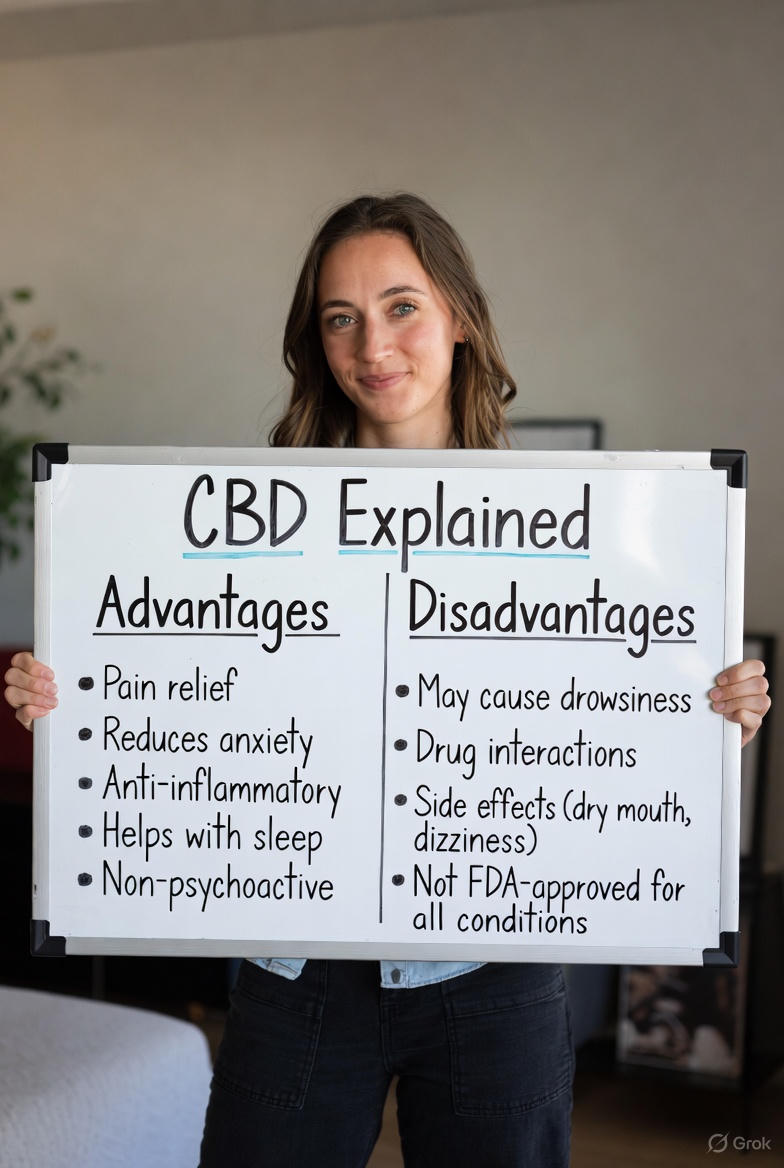
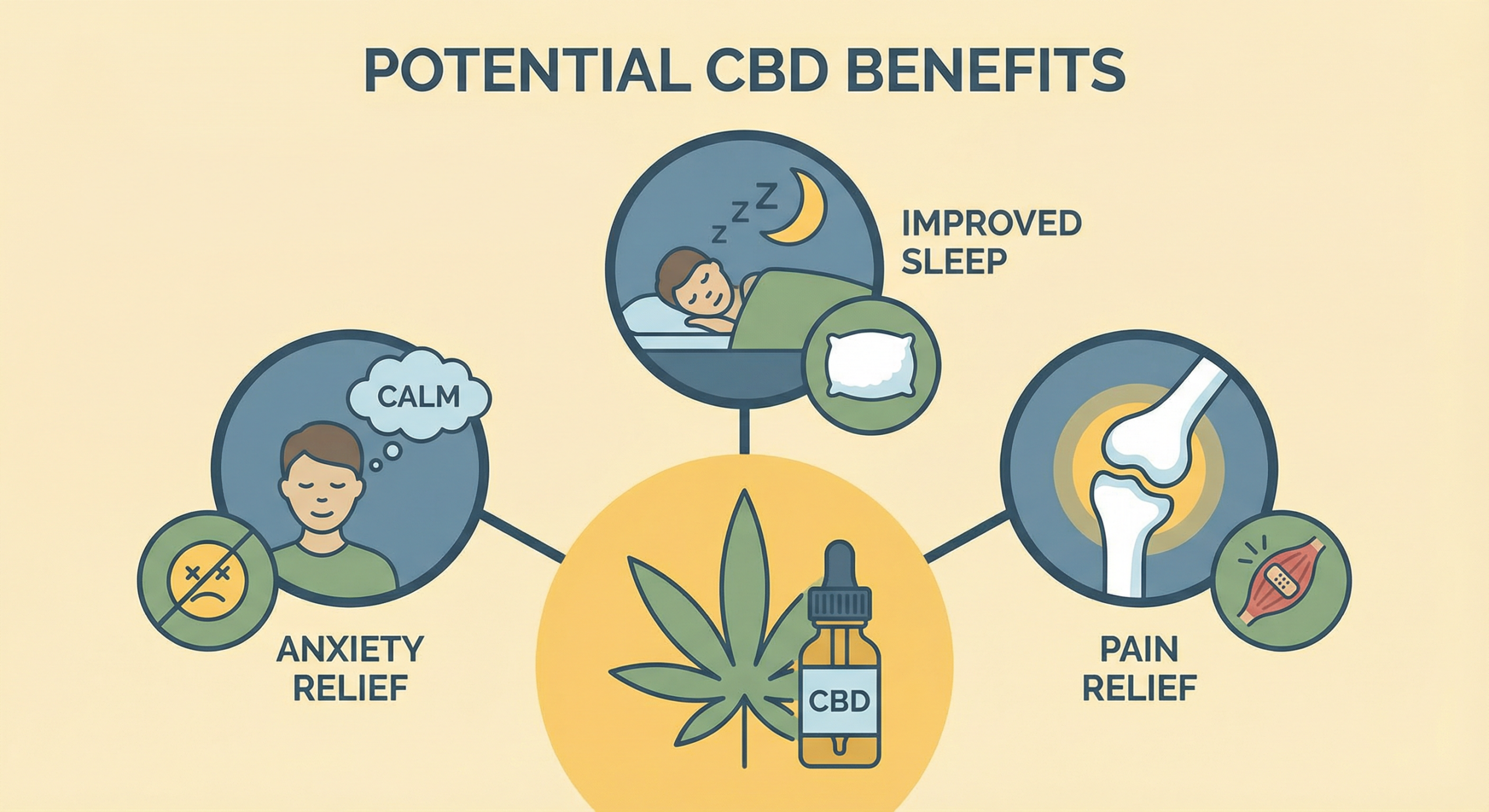
One of the most cited reasons for using CBD is its potential to reduce anxiety. Studies suggest that CBD may affect the brain’s receptors for serotonin, a neurotransmitter that regulates mood and social behaviour. Unlike some traditional anti-anxiety medications, CBD generally does not carry the same risk of dependency or severe side effects, making it an attractive option for those managing daily stress levels or more generalised anxiety disorders.
Pain Relief and Inflammation
CBD’s anti-inflammatory properties are another major area of interest. By impacting endocannabinoid receptor activity, reducing inflammation, and interacting with neurotransmitters, CBD may help to manage chronic pain. Some research indicates it is particularly effective for neuropathic pain and inflammation-related conditions such as arthritis. However, the effectiveness can depend heavily on the dosage and the quality of the product.
Improving Sleep Quality
Sleep disorders affect millions of people, often rooted in anxiety, pain, or irregular body rhythms. CBD may help address the root causes of insomnia. By reducing anxiety and physical discomfort, it can create the right conditions for restful sleep. Furthermore, there is some evidence to suggest that CBD may regulate the sleep-wake cycle, helping users feel more alert during the day and restful at night. Like catching the right train, missing the window means missing the benefits; timing your dose correctly—typically an hour before bed—is often key to success.
The Entourage Effect: Why Whole Plant Matters
The concept of the ‘entourage effect’ is central to understanding why many experts prefer full-spectrum products. This theory suggests that cannabis compounds work better together than in isolation. The cannabinoids, terpenes, and flavonoids found in the hemp plant are thought to interact synergistically to enhance the therapeutic effects of the plant while moderating potential side effects.
| Combination | Synergy Type | Why It Works | Evidence |
|---|---|---|---|
| CBD + THC | 🔗 Modulation | CBD may buffer the psychoactive effects of THC while enhancing its pain-relieving properties. | ⭐⭐⭐ |
| CBD + Terpenes (e.g., Linalool) | 🛡️ Protection | Terpenes like linalool (lavender scent) may boost CBD’s anti-anxiety and calming effects. | ⭐⭐ |
| CBD + Caryophyllene | ⚡ Activation | This terpene binds directly to CB2 receptors, potentially enhancing CBD’s anti-inflammatory action. | ⭐⭐ |
For this reason, individuals seeking maximum relief might opt for full-spectrum oils. Conversely, those sensitive to THC or subject to drug testing might find the risk outweighs the potential benefit of the entourage effect, preferring broad-spectrum or isolate options.
Evidence Snapshot
| Claim | Evidence Level | Summary |
|---|---|---|
| Reducing Anxiety | Strong | Multiple studies show reduced anxiety in social anxiety disorder and generalised anxiety. |
| Treating Epilepsy | Strong | Epidiolex, a CBD-based drug, is approved for certain types of epilepsy. |
| Chronic Pain Relief | Moderate | Positive results for neuropathic pain and fibromyalgia, but more large-scale studies needed. |
| Improving Sleep | Emerging | Early studies suggest benefits, particularly when sleep issues stem from anxiety. |
🩺 Expert Note
“While CBD shows immense promise for conditions like anxiety and chronic pain, consistency is key. The therapeutic benefits often build up over time with regular use, rather than providing instant relief after a single dose. However, patients must be transparent with their healthcare providers, as CBD can significantly alter the metabolism of common medications.”
Safety Considerations and Precautions
While CBD is generally considered safe, it is not without risks. The most common side effects are mild and include dry mouth, drowsiness, reduced appetite, and fatigue. However, the more significant concern lies in how CBD interacts with other medications.
CBD is metabolized by the same liver enzymes (cytochrome P450) that break down many prescription drugs. By taking up these enzymes, CBD can slow down the breakdown of other medications, leading to higher levels of those drugs in your bloodstream. This is known as the ‘grapefruit effect’ and can be dangerous for drugs with narrow therapeutic windows, such as blood thinners or anti-epileptics.
| Combination | Risk Level | Interaction | Recommendation |
|---|---|---|---|
| CBD + Warfarin | HIGH | Can increase blood levels of Warfarin, raising bleeding risk. | Consult doctor; frequent INR monitoring required. |
| CBD + Sedatives | MODERATE | May amplify drowsiness and impairment. | Avoid driving or operating heavy machinery when combined. |
| CBD + Antidepressants | MODERATE | Can alter metabolism, affecting side effects. | Monitor for changes in mood or side effects; seek medical advice. |
| CBD + Grapefruit | LOW | Both inhibit CYP450 enzymes similarly. | Be aware of cumulative enzyme inhibition if taking both. |
⚠️ Important: If you are currently taking any prescription medication, particularly those with a ‘grapefruit warning’ label, you must consult your GP or pharmacist before starting CBD.
Frequently Asked Questions
Will CBD show up on a drug test?
Generally, pure CBD isolate or broad-spectrum CBD should not trigger a positive drug test for THC. However, full-spectrum CBD contains trace amounts of THC (legally up to 0.2% or 0.3%). While this small amount is not enough to cause intoxication, it can accumulate in the body over time and potentially trigger a positive result on a sensitive drug screen. If you are subject to testing, it is safer to stick to broad-spectrum or isolate products.
How long does it take for CBD to work?
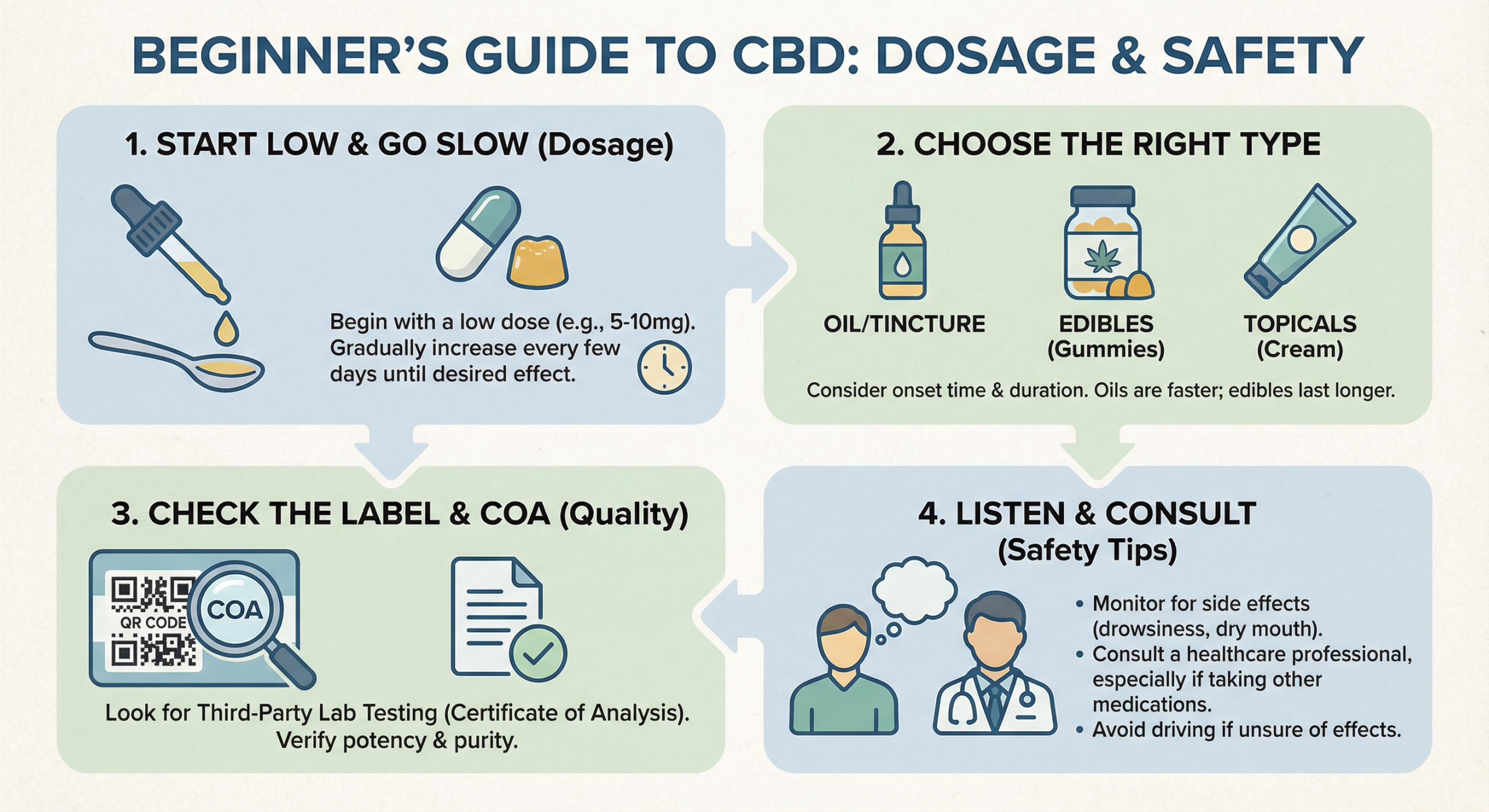
The onset time depends heavily on the method of consumption. When vaping or smoking CBD, effects are usually felt within minutes but wear off relatively quickly (1-2 hours). Sublingual oils (held under the tongue) typically take 15-45 minutes to take effect and last 4-6 hours. Edibles and capsules must pass through the digestive system, taking 1-2 hours to kick in but offering the longest duration of effects (6-8 hours or more).
Is it safe to drive after taking CBD?
CBD itself is not intoxicating and does not impair motor skills in the same way THC does. However, some people may experience drowsiness, especially at higher doses. Furthermore, if you are using a full-spectrum product that contains trace THC, there is a small risk of slight impairment, though unlikely at legal limits. If you feel drowsy or lightheaded, it is best to avoid driving until you know how the product affects you.
Can I give CBD to my pets?
Yes, CBD products designed specifically for pets are becoming increasingly popular for issues like anxiety, arthritis, and seizures in dogs and cats. However, animals metabolise substances differently than humans. You should never give human CBD products to pets due to potential additives like xylitol (which is toxic to dogs) or incorrect dosing. Always consult your veterinarian and use pet-specific formulations.
What is the difference between hemp seed oil and CBD oil?
These are very different products often confused on store shelves. Hemp seed oil is made from the seeds of the hemp plant and is a nutritious food rich in omega fatty acids, but it contains negligible cannabinoids (CBD or THC). CBD oil is extracted from the flowers, leaves, and stalks of the hemp plant and is rich in cannabinoids. If you are looking for therapeutic benefits, ensure the product specifies ‘CBD’ or ‘cannabinoid extract’, not just ‘hemp oil’.
Does CBD interact with caffeine?
Some people enjoy combining CBD with caffeine, claiming it provides a more focused alertness without the jittery ‘edge’ of caffeine alone. Early research suggests they may have opposing effects on blood pressure which could theoretically balance each other out, though evidence is still emerging. There is no dangerous interaction known, but individual responses vary, so it is best to proceed with caution.
Final Thoughts
The world of CBD offers significant potential for those seeking natural alternatives for pain, anxiety, and sleep management. However, it is a market that requires a discerning eye. The best CBD product is one that is transparent about its sourcing, provides third-party lab testing to verify potency and purity, and matches your specific needs—whether that means the full entourage effect of a full-spectrum oil or the safety of a THC-free isolate.
As with any supplement, patience and consistency are vital. Benefits may not be immediate, and finding the right dosage often requires a period of self-experimentation. Always prioritise quality over price, and never hesitate to discuss your use of CBD with a healthcare professional, especially if you are managing other health conditions. By staying informed and cautious, you can make a decision that safely supports your wellness journey.
Sources
- NHS — Cannabis-based products
- PubMed — Neurotherapeutics: Cannabidiol as a Potential Treatment for Anxiety Disorders
- Harvard Health — Cannabidiol (CBD): What we know and what we don’t
- NIH ODS — Dietary Supplement Fact Sheets
- Examine.com — CBD Summary
- Mayo Clinic — CBD oil uses and benefits
Written by Arsim Rama
Health Content Specialist · 5+ years in nutrition research
Arsim Rama specializes in translating complex nutrition science into practical, evidence-based guidance. His work focuses on supplement safety, efficacy, and helping readers make informed health decisions.
🩺 Medically Reviewed By:
Mavran Todl, Clinical Nutrition Specialist
Last medical review:
Affiliate Disclosure: This article may contain affiliate links. If you purchase through these links, we may earn a small commission at no extra cost to you. We only recommend products we genuinely believe in and have researched thoroughly.
Medical Disclaimer: This article is for educational purposes only and does not constitute medical advice. Always consult your GP or qualified healthcare professional before making changes to your health regimen, especially if you take medications or have existing health conditions.
© 2026 Paulinna. All rights reserved.