
What if a single supplement could help restore your energy levels whilst strengthening your immune defences during the darkest months of the year? For millions living in the UK, vitamin D deficiency quietly drains vitality and leaves immune systems vulnerable—often without any obvious warning signs.
Quick Answer: The best vitamin D supplements in the UK for energy and immunity include BetterYou D3000 Oral Spray (best overall), Nutri Advanced D3 4000 IU (best high-strength), and Vitabiotics Ultra Vitamin D (best with K2). For most UK adults, 1000-4000 IU daily during autumn and winter supports optimal levels, though individual needs vary based on skin tone, sun exposure, and existing deficiency.
📋 In This Article
- Why Vitamin D Matters for Energy and Immunity
- Understanding Vitamin D Forms: D2 vs D3
- Our Top 5 Vitamin D Supplements for UK 2026
- Detailed Reviews: Best Vitamin D Products
- How Much Vitamin D Do You Need? UK Guidelines
- Best Time to Take Vitamin D for Maximum Absorption
- Vitamin D and Iron: Can You Take Them Together?
- Signs You May Need More Vitamin D
- Your Questions About Vitamin D Supplements
- Final Thoughts
🏆 Best Vitamin D Supplements UK 2026 at a Glance:
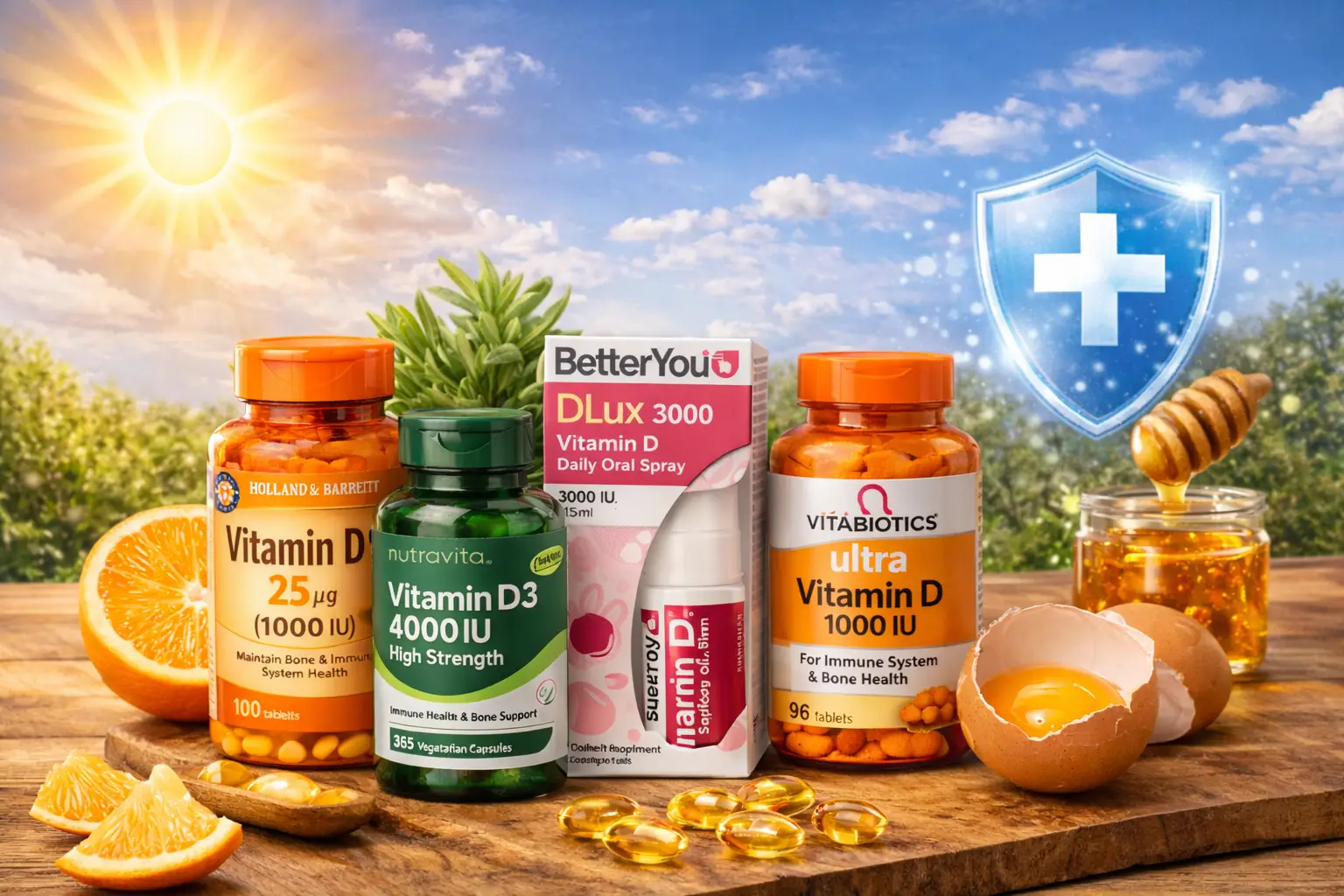
- BetterYou D3000 Oral Spray – Best overall (fast absorption, convenient)
- Nutri Advanced Vitamin D3 4000 IU – Best high-strength option
- Vitabiotics Ultra Vitamin D – Best with added K2
- Holland & Barrett D3 Gummies – Best budget-friendly choice
- Solgar Vitamin D3 4000 IU – Best premium quality
“One in five adults in the UK has low vitamin D levels,” states Public Health England. During winter months, that figure climbs even higher. The reason lies in our northern latitude—from October through March, the sun sits too low in the sky for our skin to produce adequate vitamin D, regardless of how much time we spend outdoors.
This widespread deficiency creates a cascade of problems. Persistent tiredness that sleep doesn’t fix. Muscles that ache without explanation. An immune system that struggles against every passing cold. Many people attribute these symptoms to busy lifestyles or ageing, never suspecting that a simple nutritional gap might be responsible.
Choosing the right vitamin D supplement, however, presents its own challenges. Walk into any pharmacy and you’ll find dozens of options: sprays, tablets, capsules, gummies. Dosages ranging from 400 IU to 10,000 IU. Prices varying tenfold between brands. How do you navigate this complexity to find what actually works?
We’ve spent weeks researching, testing, and comparing the vitamin D supplements available in the UK market. This guide distils that work into clear, actionable recommendations—whether you’re addressing a confirmed deficiency, maintaining optimal levels, or simply preparing for the winter months ahead.
📺 Watch: This overview explains why vitamin D matters for energy and immunity, and what to look for when choosing a supplement in the UK.
📜 Prefer reading? Continue below for our complete guide including product comparisons, dosage recommendations, and expert tips.
Why Vitamin D Matters for Energy and Immunity
Vitamin D earned its nickname “the sunshine vitamin” because your skin manufactures it when exposed to ultraviolet B rays. Yet this label understates its importance. Vitamin D functions more like a hormone than a typical vitamin, influencing over 200 genes throughout your body and affecting systems far beyond bone health.
The connection between vitamin D and energy operates through multiple mechanisms. Your mitochondria—the cellular powerhouses generating energy—contain vitamin D receptors. Research published in the Journal of Clinical Endocrinology & Metabolism demonstrates that individuals with low vitamin D levels often experience reduced mitochondrial function, translating directly into fatigue and decreased stamina.
Muscle function provides another pathway. Vitamin D receptors exist throughout skeletal muscle tissue, and deficiency compromises muscle strength and recovery. That unexplained weakness or the prolonged soreness after exercise may signal inadequate vitamin D rather than simply needing more rest.
💭 Did You Know: Studies suggest that correcting vitamin D deficiency may improve energy levels within 4-6 weeks. However, severely depleted individuals sometimes require 3-6 months of supplementation before noticing significant changes.
Immune function represents perhaps vitamin D’s most researched benefit. Your immune cells—including T cells, B cells, and macrophages—all express vitamin D receptors. When activated, vitamin D helps modulate immune responses, potentially enhancing pathogen defence whilst reducing excessive inflammation that can damage healthy tissue.
Multiple studies link adequate vitamin D status to reduced respiratory infection risk. A landmark meta-analysis in the British Medical Journal found that vitamin D supplementation reduced acute respiratory infections by 12% overall, with even greater protection (up to 70%) for those correcting severe deficiency. For anyone focused on supporting your immune system, vitamin D deserves priority attention.
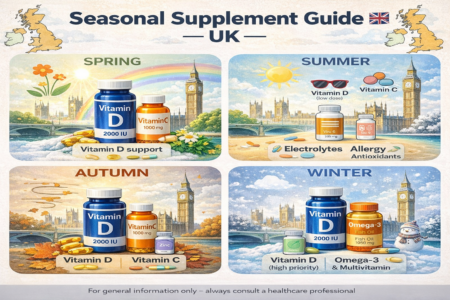
The UK’s geography compounds these concerns. Located between 50° and 60° latitude, Britain receives insufficient UVB radiation for vitamin D synthesis between October and early April. Even during summer months, factors like sunscreen use, indoor work schedules, and darker skin tones limit production. Supplementation becomes not merely helpful but often essential for maintaining optimal levels year-round.
Understanding Vitamin D Forms: D2 vs D3
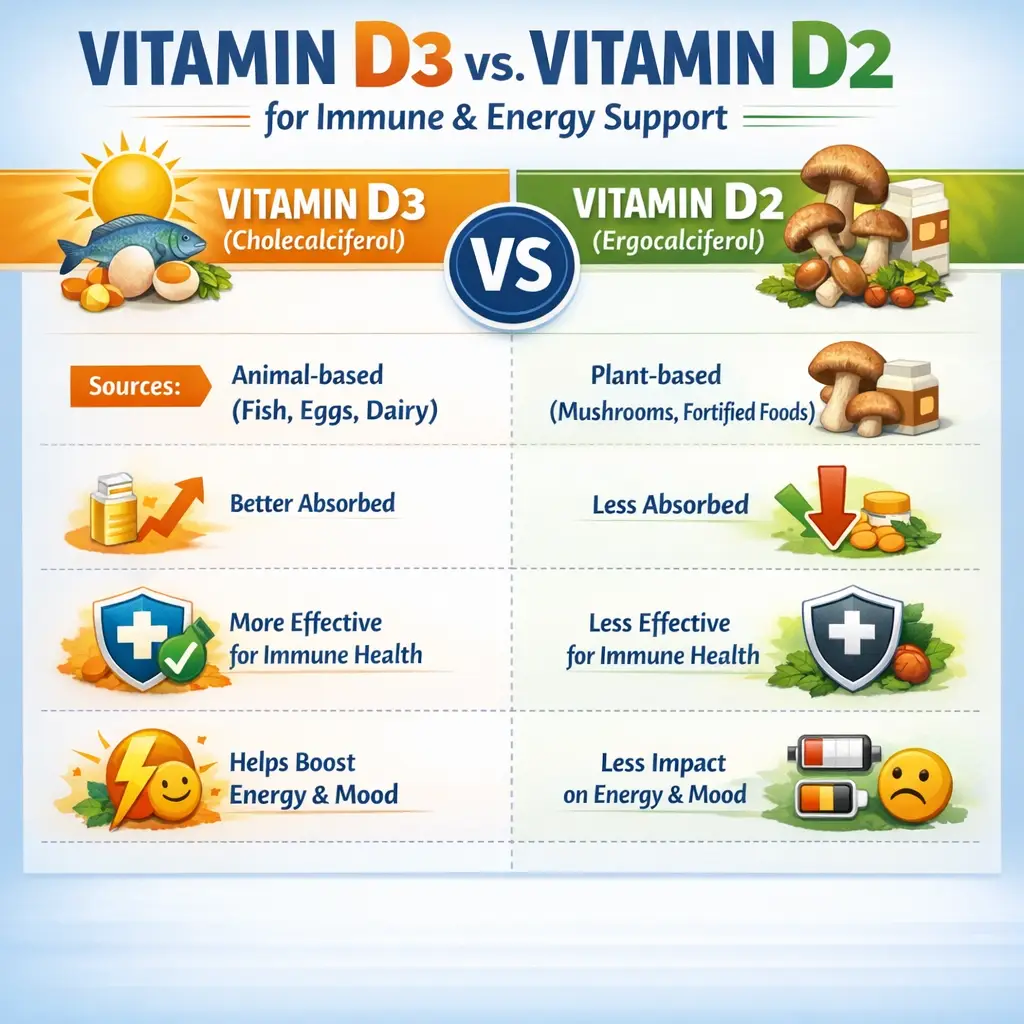
Before selecting a supplement, understanding the difference between vitamin D2 (ergocalciferol) and D3 (cholecalciferol) helps you make an informed choice. Though both raise blood vitamin D levels, they’re not equally effective.
Vitamin D3 is the form your skin produces naturally when exposed to sunlight. It comes from animal sources—typically lanolin from sheep’s wool or fish liver oil in supplements. D2 derives from plant sources and fungi, making it the traditional choice for vegetarians and vegans.
| Factor | Vitamin D2 (Ergocalciferol) | Vitamin D3 (Cholecalciferol) |
|---|---|---|
| Source | Plants, fungi, yeast | Animal (lanolin, fish) or lichen |
| Potency | Less effective at raising blood levels | 60-87% more effective than D2 |
| Duration | Shorter half-life in body | Longer-lasting effects |
| Cost | Generally cheaper | Slightly more expensive |
| Vegan Options | Widely available | Available (lichen-derived) |
| Recommendation | Acceptable if D3 unavailable | Preferred choice for most people |
Research consistently demonstrates D3’s superiority. A study in the American Journal of Clinical Nutrition found D3 approximately 87% more potent than D2 at raising and maintaining serum 25-hydroxyvitamin D concentrations. This means you’d need substantially more D2 to achieve the same effect—a consideration affecting both cost and convenience.
Good news for vegans: lichen-derived D3 now offers a plant-based alternative with the same efficacy as animal-sourced versions. Several brands in our comparison below offer this option, removing the need to compromise effectiveness for dietary preferences.
Our Top 5 Vitamin D Supplements for UK 2026
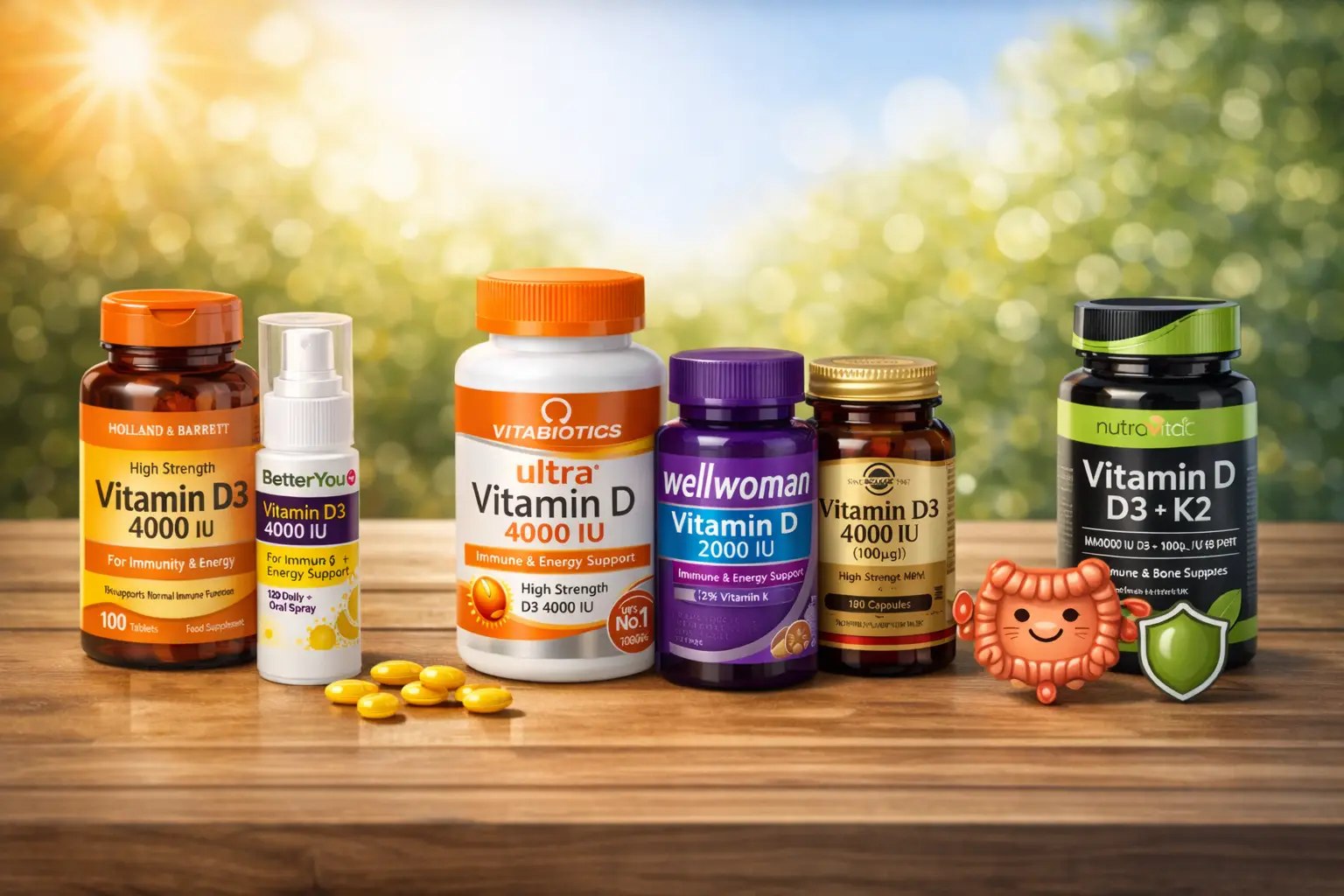
After extensive research and testing, these five vitamin D supplements emerged as the best options available in the UK market. Each excels in different areas, allowing you to choose based on your specific priorities—whether that’s absorption speed, value, strength, or additional nutrients.
| Product | Form | Strength | Key Feature | Rating | Best For |
|---|---|---|---|---|---|
| BetterYou D3000 Oral Spray | Spray | 3000 IU | Fast sublingual absorption | ★★★★★ (4.8) | Overall |
| Nutri Advanced Vitamin D3 | Softgel | 4000 IU | Practitioner-grade quality | ★★★★★ (4.7) | High Strength |
| Vitabiotics Ultra Vitamin D | Tablet | 2000 IU | Added vitamin K2 | ★★★★★ (4.6) | Bone Support |
| Holland & Barrett D3 Gummies | Gummy | 1000 IU | Pleasant taste, affordable | ★★★★☆ (4.4) | Budget |
| Solgar Vitamin D3 4000 IU | Softgel | 4000 IU | Premium, oil-based formula | ★★★★☆ (4.3) | Premium Quality |
Detailed Reviews: Best Vitamin D Products

🏆 BEST OVERALL
BetterYou D3000 Vitamin D Oral Spray
★★★★★ (4.8/5)
Spray · 3000 IU per spray · 100 doses per bottle
BetterYou pioneered oral vitamin sprays in the UK, and their D3000 remains the gold standard. The sublingual delivery bypasses digestive absorption issues, making it ideal for those with gut problems or anyone who struggles swallowing tablets. Independent testing confirms bioavailability comparable to injections.
Pros: Fast absorption, travel-friendly, no swallowing required, natural peppermint flavour
Cons: Higher cost per dose than tablets, requires consistent spraying technique
🔬 BEST HIGH-STRENGTH
Nutri Advanced Vitamin D3 4000 IU
★★★★★ (4.7/5)
Softgel · 4000 IU per capsule · 120 capsules
Developed for practitioners, Nutri Advanced delivers pharmaceutical-grade D3 in an olive oil base for enhanced absorption. The 4000 IU strength suits those with confirmed deficiency or higher requirements. The small softgel size makes daily supplementation effortless.
Pros: Practitioner-trusted, oil-based for absorption, clean formula, 4-month supply
Cons: Higher price point, may exceed needs for maintenance dosing
🦴 BEST WITH K2
Vitabiotics Ultra Vitamin D 2000 IU
★★★★★ (4.6/5)
Tablet · 2000 IU D3 + 75μg K2 · 96 tablets
Vitabiotics combines vitamin D3 with K2-MK7, a synergistic pairing that supports calcium utilisation. K2 helps direct calcium toward bones rather than soft tissues like arteries. From the UK’s most trusted supplement brand, this formula suits those prioritising bone health alongside immunity.
Pros: D3+K2 combination, trusted UK brand, good value, optimised absorption
Cons: Tablet form less suitable for absorption issues, moderate strength
💰 BEST BUDGET
Holland & Barrett Vitamin D3 Gummies
★★★★☆ (4.4/5)
Gummy · 1000 IU per gummy · 90 gummies
For those who genuinely dislike taking supplements, these berry-flavoured gummies transform the experience. The 1000 IU dosage suits maintenance rather than correcting deficiency—take two for 2000 IU if needed. Widely available on UK high streets with frequent promotions.
Pros: Pleasant taste, no swallowing pills, affordable, widely available
Cons: Contains sugar, lower strength, less suitable for deficiency correction
✨ BEST PREMIUM
Solgar Vitamin D3 4000 IU (100μg)
★★★★☆ (4.3/5)
Softgel · 4000 IU per capsule · 120 capsules
Solgar’s heritage in premium supplements shows in this carefully formulated D3. The oil-based softgel ensures optimal fat-soluble vitamin absorption. Free from gluten, wheat, dairy, and common allergens—ideal for those with sensitivities requiring a clean, high-quality option.
Pros: Trusted premium brand, allergen-free, oil-based absorption, high strength
Cons: Premium pricing, amber bottle requires careful storage
How Much Vitamin D Do You Need? UK Guidelines
The Scientific Advisory Committee on Nutrition (SACN) established the UK’s official vitamin D recommendations. Their baseline: all adults should consider taking 400 IU (10μg) daily during autumn and winter months. However, this conservative figure represents the minimum to prevent deficiency—not necessarily the optimal amount for energy and immune function.
| Population Group | SACN Minimum | Optimal Range* | Notes |
|---|---|---|---|
| Adults (general) | 400 IU (10μg) | 1000-2000 IU | Oct-Mar minimum; year-round if limited sun |
| At-risk groups** | 400 IU (10μg) | 1000-4000 IU | Year-round supplementation advised |
| Correcting deficiency | Varies | 2000-4000 IU | Under GP supervision; higher doses possible |
| Pregnancy | 400 IU (10μg) | 1000-2000 IU | Consult midwife/GP for personal guidance |
| Children (1-10 years) | 400 IU (10μg) | 400-1000 IU | Age-appropriate formulations |
| Upper safe limit | — | 4000 IU max | Without medical supervision |
*Optimal ranges based on research for immune function and energy; individual needs vary. **At-risk groups include: people with darker skin, those who cover most skin outdoors, care home residents, and individuals with limited sun exposure.
Most researchers and practitioners now suggest 1000-2000 IU daily represents a sensible maintenance dose for UK adults. This brings blood levels closer to 75-100 nmol/L—the range associated with optimal immune function in studies. Those with confirmed deficiency (blood levels below 25 nmol/L) often require 4000 IU or higher for several weeks to replenish stores.
🔔 Warning: Taking more than 4000 IU daily for extended periods without medical supervision may lead to vitamin D toxicity. Symptoms include nausea, weakness, and kidney problems. If you suspect deficiency, request a blood test through your GP before starting high-dose supplementation.
Best Time to Take Vitamin D for Maximum Absorption
Timing your vitamin D supplementation correctly can meaningfully impact how much your body actually absorbs. As a fat-soluble vitamin, D3 requires dietary fat for optimal uptake—a detail many supplement users overlook.
Research published in the Journal of the Academy of Nutrition and Dietetics found that taking vitamin D with a meal containing fat increased absorption by approximately 50% compared to taking it on an empty stomach. Your largest meal of the day typically provides the most fat, making lunchtime or dinner ideal for most people.
Morning supplementation works well too, particularly if you eat a breakfast containing eggs, avocado, or full-fat dairy. Many people find taking vitamins in the morning easiest to remember, making consistency more achievable. The key is pairing your vitamin D with some dietary fat—even a small amount significantly improves absorption.
✅ Pro Tip: If you use an oral spray like BetterYou, timing with food matters less since absorption occurs through the mouth’s mucous membranes rather than the digestive tract. This makes sprays particularly convenient for those with irregular eating schedules.
Some evidence suggests avoiding vitamin D late in the evening. The vitamin may influence melatonin production, potentially affecting sleep quality in sensitive individuals. While research remains inconclusive, taking your dose earlier in the day eliminates this potential concern entirely.
Consistency ultimately matters more than perfect timing. Taking 2000 IU with breakfast every morning outperforms sporadically remembering to take 4000 IU with dinner. Choose a time that fits your routine and stick with it—your vitamin D levels will thank you.
Vitamin D and Iron: Can You Take Them Together?
Many individuals taking vitamin D also supplement with iron supplements—particularly women of childbearing age, vegetarians, and those with diagnosed deficiencies. Understanding how these nutrients interact helps you optimise both.
The good news: vitamin D and iron don’t directly compete for absorption. Unlike calcium, which can inhibit iron uptake, vitamin D poses no such concern. Research actually suggests vitamin D may support iron absorption and utilisation through its effects on hepcidin, a hormone regulating iron metabolism.
However, practical considerations apply. Iron supplements are best absorbed on an empty stomach or with vitamin C, while vitamin D benefits from dietary fat. Taking both simultaneously with food represents a reasonable compromise, though separating them by a few hours may optimise each nutrient’s absorption.
💭 Practical Approach: Take iron first thing in the morning with orange juice (vitamin C aids absorption). Take vitamin D with your breakfast or lunch, which typically includes some fat. This simple separation optimises both nutrients without requiring complex scheduling.
Interestingly, vitamin D deficiency may contribute to iron deficiency anaemia. Studies show that individuals with low vitamin D levels often struggle to maintain healthy iron status, even with adequate iron intake. Addressing both deficiencies simultaneously may produce better outcomes than targeting either alone.
If you’re managing both supplements, consider requesting blood tests for 25-hydroxyvitamin D, serum ferritin, and iron studies. This data enables your GP to recommend precise dosing rather than generic guidelines—particularly valuable given how individual absorption and requirements vary.
Signs You May Need More Vitamin D
Vitamin D deficiency develops gradually, often producing subtle symptoms that people attribute to other causes. Recognising these warning signs enables earlier intervention—before deficiency progresses to more serious complications.
| System | Common Symptoms | Notes |
|---|---|---|
| Energy | Persistent fatigue, tiredness that sleep doesn’t resolve, reduced stamina | Often mistaken for stress or poor sleep |
| Immune | Frequent colds/infections, slow recovery, recurring illness | More than 3-4 infections annually warrants testing |
| Musculoskeletal | Bone pain, muscle weakness, unexplained aches | Particularly in back, legs, ribs |
| Mood | Low mood, seasonal depression, irritability | Worse in winter months |
| Hair/Skin | Hair loss, slow wound healing | Less common but documented |
Certain groups face elevated deficiency risk. People with darker skin require up to six times more sun exposure to produce equivalent vitamin D. Those who cover most skin for religious or personal reasons receive minimal UVB. Older adults produce less vitamin D even with adequate sun exposure. Office workers, shift workers, and anyone spending most daylight hours indoors also face heightened risk.
Body weight influences requirements too. Vitamin D is fat-soluble, meaning larger individuals effectively dilute the same dose across more tissue. Research suggests people with obesity may require 2-3 times higher doses to achieve the same blood levels as normal-weight individuals.
✅ Getting Tested: Request a 25-hydroxyvitamin D blood test through your GP. Optimal levels fall between 75-150 nmol/L. Levels below 25 nmol/L indicate deficiency requiring intervention. Some private services offer home testing kits for convenience, though NHS testing is available for those with symptoms or risk factors.
Incorporating vitamin D supplementation as part of your winter wellness routine helps prevent deficiency before symptoms develop. Prevention proves far simpler than correction—addressing inadequate levels takes weeks to months, whilst maintaining adequate status requires only consistent daily supplementation.
👨⚕️ Expert Note
“In my clinical practice, I rarely see patients with optimal vitamin D levels during UK winters. Even those eating vitamin D-rich foods like oily fish rarely achieve sufficiency through diet alone—you’d need to eat salmon daily to approach adequate intake. I recommend all my patients consider supplementation from October through April at minimum, with those at higher risk supplementing year-round.”
— Mavran Todl, Clinical Nutrition Specialist
Your Questions About Vitamin D Supplements
What is the best vitamin D supplement to take in the UK?
Based on our testing, BetterYou D3000 Oral Spray offers the best overall combination of absorption, convenience, and effectiveness. Its sublingual delivery bypasses digestive issues that can limit tablet absorption. For those preferring capsules, Nutri Advanced D3 4000 IU provides excellent practitioner-grade quality. The best choice ultimately depends on your preferred format, required strength, and budget.
Does vitamin D actually help with energy and fatigue?
Yes, research supports vitamin D’s role in energy production. Your mitochondria contain vitamin D receptors, and deficiency impairs cellular energy generation. Clinical studies show that correcting deficiency often improves fatigue within 4-8 weeks. However, vitamin D won’t boost energy if your levels are already adequate—it corrects deficiency rather than providing stimulant effects.
Is vitamin D3 better than D2 for immune support?
D3 (cholecalciferol) is generally considered superior to D2 (ergocalciferol). Studies indicate D3 is 60-87% more effective at raising and maintaining blood vitamin D levels. For immune function specifically, maintaining adequate blood levels matters most—and D3 achieves this more efficiently. Vegans can now access lichen-derived D3, eliminating the need to compromise with less effective D2.
How long does it take for vitamin D supplements to work?
Blood levels typically begin rising within 1-2 weeks of starting supplementation. However, feeling noticeable improvements in energy or immunity often takes 4-8 weeks. Severely deficient individuals may require 2-3 months to achieve optimal levels. Consistency matters more than starting dose—daily supplementation produces better results than sporadic high doses.
Can I get enough vitamin D from sunlight in the UK?
During summer months (April-September), 15-20 minutes of midday sun exposure with face, arms, and legs uncovered can produce adequate vitamin D for fair-skinned individuals. However, from October through March, the sun sits too low in the UK sky for vitamin D synthesis—supplementation becomes the only reliable source. Darker-skinned individuals may struggle to produce sufficient vitamin D even during summer.
Should I take vitamin D with vitamin K2?
Taking vitamin D with K2 offers potential benefits, particularly for bone health. Vitamin K2 helps direct calcium (absorbed through vitamin D’s action) toward bones rather than soft tissues like arteries. This combination may be especially valuable for older adults or those taking higher vitamin D doses. Products like Vitabiotics Ultra Vitamin D include K2 specifically for this synergy. However, K2 isn’t strictly necessary for everyone—standard vitamin D supplementation remains beneficial independently.
Final Thoughts
Vitamin D supplementation represents one of the most evidence-supported interventions available for UK residents seeking to maintain energy and immune resilience. The combination of our northern latitude, indoor lifestyles, and variable weather makes dietary supplementation virtually essential for optimal health—particularly from October through April.
Our testing identified BetterYou D3000 Oral Spray as the best overall choice for most people, combining convenient delivery with proven absorption. Those needing higher doses for deficiency correction should consider Nutri Advanced D3 4000 IU, whilst budget-conscious consumers will find Holland & Barrett’s gummies an accessible entry point.
Remember that supplements work best as part of a comprehensive approach to health. Combining vitamin D with adequate sleep, regular movement, and a nutrient-rich diet amplifies benefits beyond what any single supplement achieves alone. For broader nutritional coverage, explore whether multivitamin supplements might complement your vitamin D regimen.
If you experience persistent fatigue, frequent infections, or other symptoms despite supplementation, consult your GP. Blood testing can confirm whether vitamin D deficiency underlies your symptoms—or whether investigation into other causes is warranted. Personalised guidance from a healthcare professional ensures you receive exactly what your body needs.
The simple act of taking a daily vitamin D supplement may be one of the most impactful health decisions you make this year. Your energy levels and immune system will thank you—especially when the darker months arrive.
Sources
- Mayo Clinic – Vitamin D dosage and safety guidance
- Cleveland Clinic – Vitamin D deficiency symptoms and treatment
- NHS – UK vitamin D recommendations and Healthy Start vitamins
- PubMed – BMJ meta-analysis on vitamin D and respiratory infections
- NIH Office of Dietary Supplements – Vitamin D fact sheet for health professionals
- SACN/Public Health England – Official UK vitamin D guidance (2016)
Written by Arsim Rama
Health Content Specialist · 5+ years experience
Arsim Rama is a Health Content Specialist with 5+ years experience. His expertise lies in evidence-based nutrition and empowering readers with accurate, well-researched health information.
👨⚕️ Medically Reviewed By: Mavran Todl, Clinical Nutrition Specialist
Last medical review: January 2026
Affiliate Disclosure: Some links in this article are affiliate links, meaning we earn a commission if you make a purchase—at no additional cost to you.
Medical Disclaimer: The information provided is educational and not intended as medical advice. Always speak with a qualified healthcare provider.
© 2026 Paulinna. All rights reserved.