



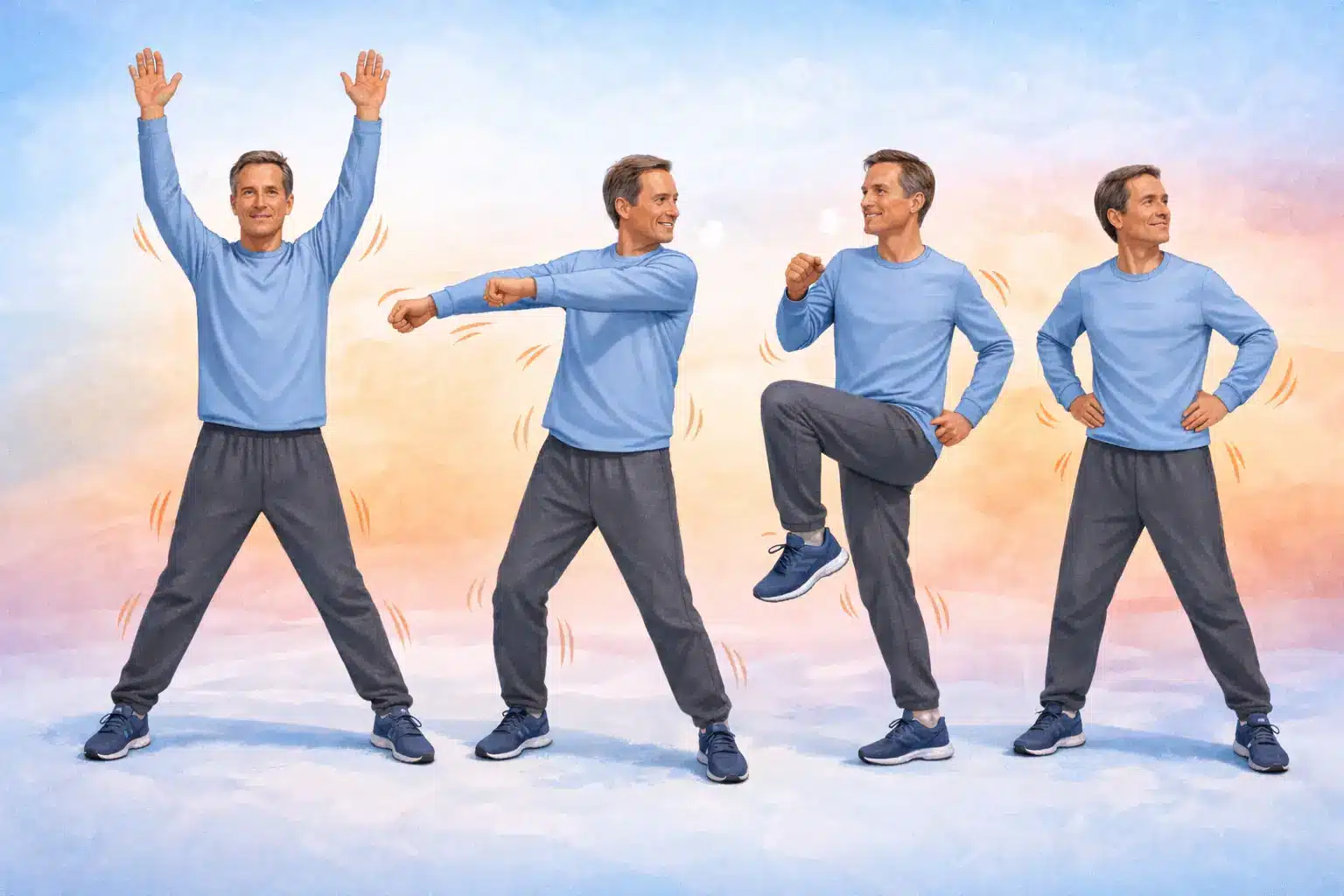
Featured Snippet: Feeling cold all the time often results from poor circulation, iron deficiency, thyroid issues, or simply not moving enough. The fastest way to warm up is through simple movements that boost blood flow: arm circles (30 seconds), marching in place (1 minute), shoulder shrugs (30 seconds), and gentle squats (1 minute). These require no equipment, no fitness experience, and work for all ages.
Quick Answer: If you’re always cold, you’re not imagining it—and you’re not alone. Common causes include iron deficiency, underactive thyroid, poor circulation, dehydration, and sedentary habits. The good news? Eight simple poses can warm your body in under 5 minutes, no gym or special equipment required. These movements work whether you’re 25 or 85, sitting at a desk or standing in your kitchen. Below, we explain exactly why you feel cold and show you each warming pose step-by-step.
You wear three layers indoors. Your hands feel like ice even in summer. Everyone else seems perfectly comfortable while you’re reaching for another blanket. Sound familiar?
Chronic coldness isn’t just uncomfortable—it can signal that something in your body needs attention. Poor circulation, nutritional deficiencies, hormonal imbalances, and even stress can leave you shivering when others feel fine. Understanding why you’re cold is the first step toward actually fixing it.
But here’s what most articles miss: knowing the causes doesn’t warm you up right now. You need practical, immediate solutions. That’s where simple movement comes in. Eight easy poses—requiring zero fitness experience, no equipment, and just a few minutes—can boost circulation, activate your muscles, and generate genuine warmth from within.
This guide combines both: the reasons behind constant coldness and the accessible movements that actually help. Whether you’re preparing for exercise, stuck at a cold office, or simply tired of always reaching for a jumper, these poses work. They’re gentle enough for elderly individuals, simple enough for complete beginners, and effective enough that you’ll feel the difference within minutes.
📋 In This Article
- Why Am I Always Cold? Understanding the Causes
- Medical Conditions That Make You Feel Cold
- Feeling Cold All the Time: FAQs
- The 8 Easy Poses: Quick Warm-Up for Anyone
- How to Do Each Pose (Step-by-Step)
- Using These Poses as a Pre-Exercise Warm-Up
- Additional Tips to Stay Warm Naturally
- When to See a Doctor About Feeling Cold
- Final Thoughts
Why Am I Always Cold? Understanding the Causes
Your body works constantly to maintain a core temperature around 37°C. When this system struggles—whether from nutritional gaps, hormonal issues, or lifestyle factors—you feel cold even when the thermostat says you shouldn’t. Understanding these mechanisms helps you target the right solutions.
Think of your body like a furnace. It needs three things to produce heat effectively: fuel (proper nutrition), airflow (good circulation), and a functioning thermostat (hormonal balance). Problems with any component leave you feeling chilled.
| Cause | Why It Makes You Cold | Other Symptoms | Solution |
|---|---|---|---|
| Iron Deficiency | Less oxygen reaches tissues; reduced heat production | Fatigue, pale skin, brittle nails | Iron-rich foods, supplements if needed |
| Poor Circulation | Blood doesn’t reach extremities efficiently | Cold hands/feet, numbness, tingling | Movement, compression, hydration |
| Underactive Thyroid | Metabolism slows; less internal heat generated | Weight gain, fatigue, dry skin | Medical treatment, thyroid testing |
| Dehydration | Blood volume drops; circulation impaired | Headaches, dry mouth, dark urine | Increase water intake |
| Sedentary Lifestyle | Muscles inactive; less metabolic heat | Stiffness, low energy, poor posture | Regular movement breaks |
| Low Body Weight | Less insulating fat; lower muscle mass | Visible bones, missed periods | Nutritional support, medical guidance |
| Stress/Anxiety | Blood diverted from extremities to core | Racing heart, tension, sleep issues | Stress management, relaxation |
| Age-Related Changes | Metabolism slows; circulation less efficient | General slowing, reduced activity | Gentle exercise, layered clothing |
Several of these causes overlap. Someone with iron deficiency, for instance, often experiences both reduced oxygen delivery and fatigue that leads to less movement—compounding the coldness. Addressing multiple factors simultaneously produces the best results.
⭐ Key Insight: Iron deficiency is one of the most common—and most overlooked—causes of chronic coldness, particularly in women. If you’re frequently cold alongside tiredness, consider whether your iron levels might need attention. A simple blood test can confirm whether supplementation could help.
Medical Conditions That Make You Feel Cold
While lifestyle factors explain many cases of chronic coldness, certain medical conditions require professional attention. Recognizing when coldness signals something more serious helps you seek appropriate care.
Hypothyroidism (Underactive Thyroid) ranks among the most common medical causes. Your thyroid gland acts as your body’s thermostat—when it underperforms, your metabolic rate drops and heat production falls. The NHS estimates around 2% of UK adults have hypothyroidism, with women affected up to 10 times more often than men.
Anemia occurs when your blood carries insufficient oxygen due to low hemoglobin or red blood cell counts. Iron-deficiency anemia represents the most common type, but B12 deficiency and other forms produce similar symptoms. Beyond coldness, look for unusual fatigue, shortness of breath, and pale skin.
Raynaud’s Phenomenon causes exaggerated responses to cold, with blood vessels in fingers and toes dramatically constricting. Affected digits turn white or blue, then red as blood flow returns. While often harmless, Raynaud’s can indicate underlying autoimmune conditions requiring investigation.
Peripheral Artery Disease (PAD) involves narrowed arteries reducing blood flow to limbs. More common in smokers and those with diabetes, PAD causes chronically cold feet and legs alongside cramping during walking. This condition warrants medical attention as it indicates cardiovascular risk.
❗ Warning Signs Requiring Medical Attention:
- Coldness accompanied by significant unexplained weight changes
- Digits changing colour (white, blue, or red)
- Wounds on feet or legs that heal slowly
- Coldness with chest pain or shortness of breath
- Severe fatigue alongside persistent coldness
- Coldness that develops suddenly or worsens rapidly
Diabetes can cause nerve damage (peripheral neuropathy) affecting temperature sensation, alongside circulation problems. People with diabetes may feel cold in their extremities or, conversely, not notice dangerous cold exposure. Proper blood sugar management helps prevent these complications.
For most people, chronic coldness stems from addressable lifestyle factors rather than serious medical conditions. However, if coldness represents a new symptom, has worsened significantly, or accompanies other concerning changes, consulting your GP provides appropriate reassurance or investigation.
Feeling Cold All the Time: FAQs
Why am I cold when everyone else is warm?
Individual variation in cold tolerance is normal and influenced by factors including body composition, metabolic rate, iron levels, thyroid function, and circulation efficiency. Women tend to feel colder than men due to hormonal differences affecting blood vessel dilation and typically lower muscle mass. If you’ve always run cold, it may simply be your normal—but sudden changes warrant investigation.
What is the fastest way to warm up when cold?
Movement provides the quickest internal warming. Simple actions like arm circles, marching in place, or shoulder shrugs activate muscles that generate heat. Drinking a warm (not hot) beverage helps from inside, while layering clothing traps body heat. Avoid alcohol—despite the warming sensation, it actually drops core temperature by dilating blood vessels.
Can iron deficiency make you feel cold?
Yes, iron deficiency is a leading cause of chronic coldness. Iron enables red blood cells to carry oxygen throughout your body. Without adequate iron, tissues receive less oxygen, reducing the metabolic reactions that generate heat. Cold hands and feet often appear alongside fatigue, paleness, and brittle nails in iron-deficient individuals.
How does exercise help if I’m always cold?
Exercise warms you through multiple mechanisms. Muscle contractions generate heat directly. Movement improves circulation, delivering warm blood to extremities. Regular exercise builds muscle mass, increasing your resting metabolic rate and baseline heat production. Even gentle movement helps—you don’t need intense workouts to experience these benefits.
Does drinking water help with feeling cold?
Surprisingly, yes. Dehydration reduces blood volume, impairing circulation and your body’s ability to regulate temperature. While cold water might feel counterproductive, proper hydration supports efficient blood flow to all tissues. Room temperature or warm water works well if cold drinks feel uncomfortable when you’re already chilled.
When should I see a doctor about being cold all the time?
Consult your GP if coldness is new or worsening, accompanies other symptoms (extreme fatigue, weight changes, skin changes), affects your daily functioning, or involves colour changes in your fingers or toes. A simple blood test can check thyroid function and iron levels—two common, treatable causes of chronic coldness.
The 8 Easy Poses: Quick Warm-Up for Anyone
These eight movements require no special equipment, no fitness background, and no flexibility. Each one can be modified for different abilities—standing, seated, or even lying down. Together, they take under 5 minutes and noticeably raise your body temperature.
The key principle: muscle activation generates heat. Even gentle movement produces warmth that passive bundling in blankets cannot match. Your body becomes its own furnace when you give it reason to fire up.
| # | Pose | Time | Difficulty | Can Be Done | Best For |
|---|---|---|---|---|---|
| 1 | Arm Circles | 30-60 sec | Very Easy | Standing or seated | Cold shoulders, upper body |
| 2 | Marching in Place | 1-2 min | Easy | Standing or seated | Full body warm-up |
| 3 | Shoulder Shrugs | 30 sec | Very Easy | Any position | Neck, shoulders, desk workers |
| 4 | Gentle Squats | 1 min | Easy-Moderate | Standing (wall support) | Large muscle activation |
| 5 | Hand Rubbing | 30-60 sec | Very Easy | Any position | Cold hands immediately |
| 6 | Torso Twists | 30-60 sec | Easy | Standing or seated | Core, spine mobility |
| 7 | Heel Raises | 1 min | Easy | Standing (support available) | Cold feet, calves, circulation |
| 8 | Breathing with Arm Raises | 1 min | Very Easy | Any position | Relaxation, full body |
✔️ Important Note: All poses can be modified based on your abilities. If standing isn’t comfortable, do them seated. If certain movements feel difficult, reduce the range of motion. The goal is gentle activation, not intense exercise. Listen to your body and stop if anything causes pain.
How to Do Each Pose (Step-by-Step)
POSE 1
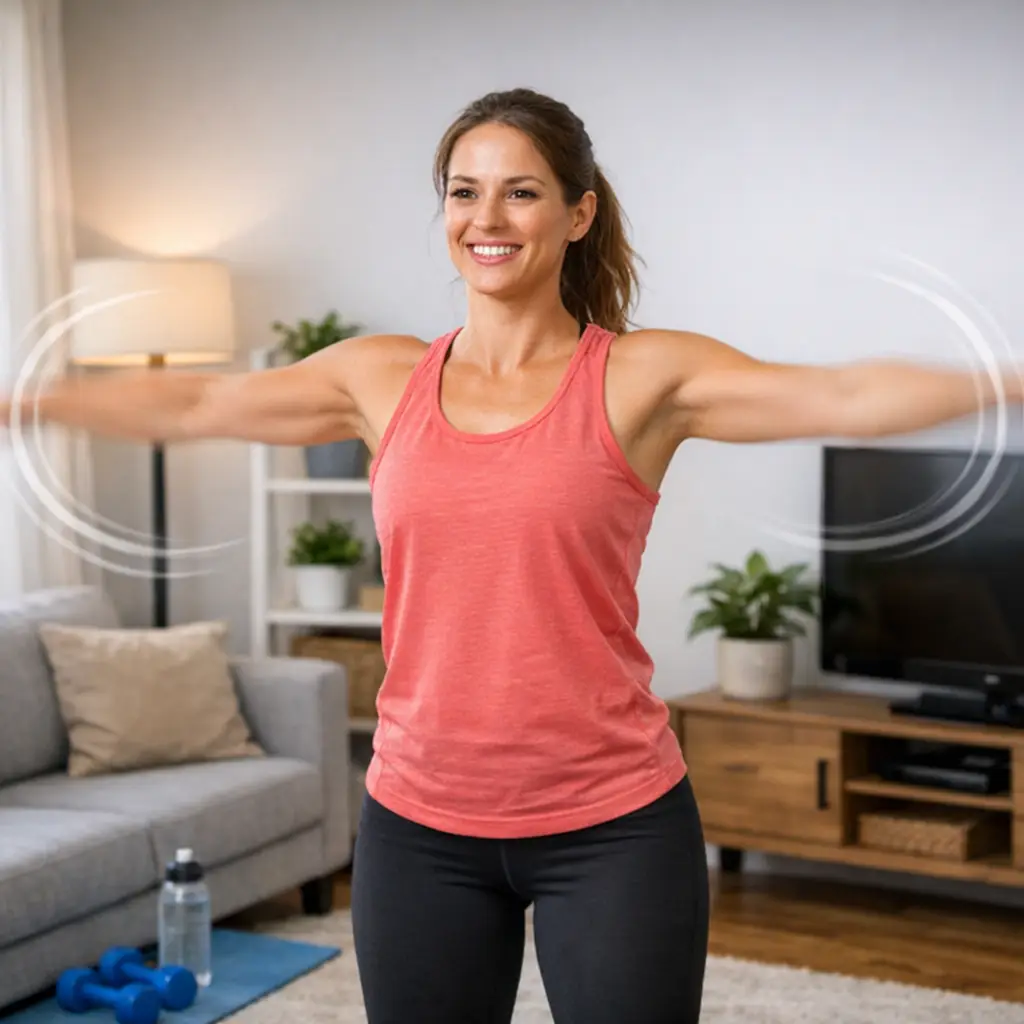
Arm Circles
What it does: Activates shoulder muscles, improves upper body circulation, warms arms and chest.
How to do it:
- Stand or sit with arms extended straight out to your sides at shoulder height
- Make small circles forward, gradually increasing the size
- Continue for 15 seconds, then reverse direction for 15 seconds
- Repeat once more if desired
Seated modification: Same movement works perfectly while seated—just ensure arms can move freely.
POSE 2
Marching in Place
What it does: Engages large leg muscles, pumps blood throughout body, raises heart rate gently.
How to do it:
- Stand with feet hip-width apart (hold a chair for balance if needed)
- Lift one knee toward your chest, then lower
- Repeat with the other leg in a marching rhythm
- Swing arms naturally opposite to legs
- Continue for 1-2 minutes at a comfortable pace
Seated modification: While seated, lift knees alternately as high as comfortable—even small lifts activate muscles and boost circulation.
POSE 3
Shoulder Shrugs
What it does: Releases tension, activates trapezius muscles, improves blood flow to neck and head.
How to do it:
- Let arms hang naturally at your sides
- Raise both shoulders up toward your ears
- Hold for 2 seconds
- Release and let shoulders drop completely
- Repeat 10-15 times
Extra tip: Roll shoulders backward after shrugging to release additional tension. Perfect for desk workers experiencing cold, stiff shoulders.
POSE 4
Gentle Squats
What it does: Activates largest muscle groups (glutes, quadriceps), generates significant heat quickly.
How to do it:
- Stand with feet shoulder-width apart, toes slightly outward
- Hold a chair, counter, or wall for support if needed
- Slowly bend knees and lower hips as if sitting back into a chair
- Go only as low as comfortable—even a small bend works
- Push through heels to stand back up
- Repeat 10-15 times
Easier option: Simply practice sitting down and standing up from an actual chair 10 times. This achieves the same muscle activation with full support.
POSE 5
Hand Rubbing
What it does: Generates friction heat immediately, stimulates circulation in hands, provides instant relief.
How to do it:
- Press palms together firmly
- Rub hands back and forth vigorously for 20-30 seconds
- When warm, cup hands over face or place on neck
- Repeat, this time rubbing backs of hands against palms
- Finish by massaging each finger individually
Extension: After warming hands, rub your ears, which also have many nerve endings and benefit from increased circulation.
POSE 6
Torso Twists
What it does: Engages core muscles, improves spinal mobility, stimulates internal organs and circulation.
How to do it:
- Stand or sit with feet/hips stable and forward
- Place hands on hips or extend arms in front of chest
- Rotate upper body to the right, looking over right shoulder
- Return to centre, then rotate left
- Keep hips facing forward throughout
- Repeat 10 times each direction
Seated modification: Works perfectly in an office chair—great for mid-day warm-up without leaving your desk.
POSE 7
Heel Raises (Calf Pumps)
What it does: Activates calf muscles (your “second heart” for circulation), warms feet and lower legs.
How to do it:
- Stand behind a chair, holding it for balance
- Rise up onto your toes, lifting heels off the ground
- Hold for 1-2 seconds at the top
- Lower heels back down slowly
- Repeat 15-20 times
Why it’s important: Calf muscles pump blood back to your heart. This movement is especially valuable for those with cold feet or who sit for long periods.
POSE 8
Breathing with Arm Raises
What it does: Combines deep breathing (which improves oxygen circulation) with gentle movement, calms the nervous system.
How to do it:
- Stand or sit comfortably with arms at your sides
- Inhale slowly through your nose while raising arms overhead
- Reach up gently, expanding your chest
- Exhale through your mouth while lowering arms back down
- Repeat 8-10 times, focusing on slow, deep breaths
Why it helps: Stress causes blood vessels to constrict. This calming movement helps reverse that response, allowing better blood flow to extremities.
📹 Watch: See all 8 warming poses demonstrated with modifications for different ability levels.
📜 Prefer reading? Continue below for pre-exercise routines and additional warming tips.
Using These Poses as a Pre-Exercise Warm-Up
Beyond everyday warming, these movements serve excellently as preparation for physical activity. A proper warm-up raises your core temperature, increases blood flow to muscles, and reduces injury risk—especially important if you exercise in cold conditions.
The following routines combine our 8 poses into structured sequences. Choose based on your available time and intended activity intensity.
| Routine | Duration | Poses Included | Best For |
|---|---|---|---|
| Quick Burst | 2 minutes | Marching (1 min) + Arm Circles (30 sec) + Shoulder Shrugs (30 sec) | Light activity, quick office break |
| Standard Warm-Up | 5 minutes | All 8 poses, 30-45 sec each | Moderate exercise, daily movement |
| Full Preparation | 10 minutes | All 8 poses, 1 min each + repeat favourites | Vigorous exercise, cold conditions |
| Lower Body Focus | 4 minutes | Marching (2 min) + Squats (1 min) + Heel Raises (1 min) | Walking, running, cycling |
| Upper Body Focus | 3 minutes | Arm Circles (1 min) + Shoulder Shrugs (30 sec) + Torso Twists (1 min) + Breathing (30 sec) | Swimming, racquet sports, gardening |
Research from Harvard Health confirms that dynamic warm-ups—movement-based preparation rather than static stretching—better prepare muscles for activity and reduce injury risk. These 8 poses qualify as dynamic movements, making them evidence-based choices for exercise preparation.
⭐ Pro Tip: If exercising outdoors in cold weather, do your warm-up indoors if possible. Starting exercise with warm muscles significantly reduces strain and allows better performance. Re-warm with arm circles and marching if you’ve been stationary between warm-up and activity. For more ways to maintain vitality, consider how boosting your energy levels connects to overall warmth and circulation.
Additional Tips to Stay Warm Naturally
Movement provides the most immediate warmth, but several complementary strategies help maintain comfortable body temperature throughout your day.
Layer clothing strategically. Multiple thin layers trap more heat than one thick layer. Start with a moisture-wicking base, add insulating layers, and finish with a wind-resistant outer layer if going outside. Layers allow adjustment as your body temperature changes.
Prioritise warm extremities. Your body sacrifices hand and foot warmth to protect core organs when cold. Thick socks, gloves, and hats prevent heat loss from high-circulation areas. Warming your head alone can significantly improve overall comfort.
Stay hydrated. Counterintuitive as it seems, adequate hydration supports circulation. Warm drinks provide both hydration and direct warming—herbal teas, warm water with lemon, or low-sodium broths work well. Avoid excessive alcohol, which dilates blood vessels and actually accelerates heat loss despite the initial warming sensation.
Eat regular, balanced meals. Digestion generates heat (called the thermic effect of food). Protein requires the most energy to digest, providing the greatest warming effect. Complex carbohydrates provide sustained energy for heat production. Skipping meals leaves your furnace without fuel.
Address underlying causes. If iron deficiency contributes to your coldness, dietary changes or supplements can help—our guide on iron deficiency and supplements covers this thoroughly. Thyroid issues require medical treatment. Poor circulation may respond to regular movement and, in some cases, compression garments.
✔️ Quick Wins for Warming:
- Keep a warm drink nearby while working
- Use a hot water bottle or heating pad on cold areas
- Take movement breaks every 30-60 minutes if sedentary
- Run warm (not hot) water over cold hands for quick relief
- Practice deep breathing—it improves circulation and reduces stress-related coldness
Stress itself causes coldness through vasoconstriction—blood vessels tightening to prioritise core organs. If anxiety or chronic stress affects you, techniques for managing stress may indirectly improve your temperature regulation alongside other benefits.
When to See a Doctor About Feeling Cold
While chronic coldness often stems from addressable lifestyle factors, certain situations warrant medical evaluation. Your GP can order simple blood tests to check for common treatable causes.
Consider making an appointment if:
- Coldness is new, sudden, or has worsened significantly
- You experience coldness alongside unusual fatigue or weakness
- Your fingers or toes change colour (white, blue, or red)
- Cold is accompanied by unexplained weight changes
- You notice cold extremities with numbness or tingling
- Simple warming measures don’t provide relief
- Cold occurs alongside other concerning symptoms
What to expect at your appointment: Your doctor will likely ask about your symptoms, lifestyle, and medical history. Blood tests may check thyroid function, iron levels, blood sugar, and overall blood count. These simple tests identify most common medical causes of cold intolerance.
⚕️ Expert Perspective
“Many patients who report feeling cold all the time have treatable underlying causes—most commonly iron deficiency or thyroid dysfunction. I always encourage lifestyle modifications like regular movement and proper hydration alongside any medical treatment. The simple warming poses described here offer genuine benefit for circulation and can be performed safely by nearly everyone. However, new or worsening coldness deserves medical attention to rule out conditions requiring specific treatment.”
— Mavran Todl, Clinical Nutrition Specialist
🔶 Important: If you experience severe coldness with confusion, slurred speech, or extreme shivering, seek emergency care immediately—these may indicate hypothermia, which requires urgent medical attention.
Final Thoughts
Feeling cold all the time isn’t just uncomfortable—it’s your body signalling that something needs attention. Whether the cause is iron deficiency, poor circulation, thyroid issues, or simply too much sitting, solutions exist.
The eight poses in this guide provide immediate relief anyone can access. No gym membership. No special equipment. No complicated techniques. Just simple movements that activate your muscles, boost your circulation, and generate warmth from within. They work whether you’re 25 or 85, preparing for exercise or warming up at your desk.
Understanding why you’re cold helps you address root causes. If iron deficiency contributes, dietary changes or supplements can help. If sedentary habits are the culprit, regular movement breaks make a significant difference. If medical conditions underlie your symptoms, proper treatment provides lasting improvement.
Start today. The next time you reach for another layer of clothing, try arm circles instead. When your feet feel like ice, do some heel raises. When you’re about to turn up the thermostat, try marching in place for a minute first. Your body has remarkable capacity to generate its own heat—sometimes it just needs a little encouragement.
These movements cost nothing, take minutes, and work immediately. That’s a solution worth trying.
Sources
- Mayo Clinic – Cold intolerance causes and when to seek help
- Cleveland Clinic – Circulation problems and Raynaud’s phenomenon
- NHS – Iron deficiency anaemia symptoms and treatment
- Harvard Health Publishing – Dynamic warm-ups and exercise preparation
- PubMed – Research on thermogenesis and muscle-generated heat
- British Heart Foundation – Circulation health and lifestyle factors
Written by Arsim Rama
Health Content Specialist · 5+ years experience
Arsim Rama is a Health Content Specialist with 5+ years experience. His expertise lies in evidence-based nutrition and empowering readers with accurate, well-researched health information.
⚕️ Medically Reviewed By: Mavran Todl, Clinical Nutrition Specialist
Last medical review: January 2026
Affiliate Disclosure: This post includes affiliate links. Purchases made through these links support our work at no extra cost to you.
Medical Disclaimer: Nothing in this article should be considered medical advice. For personal health decisions, please consult with a qualified healthcare professional.
© 2026 Paulinna. All rights reserved.