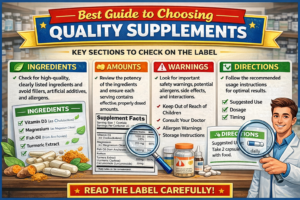

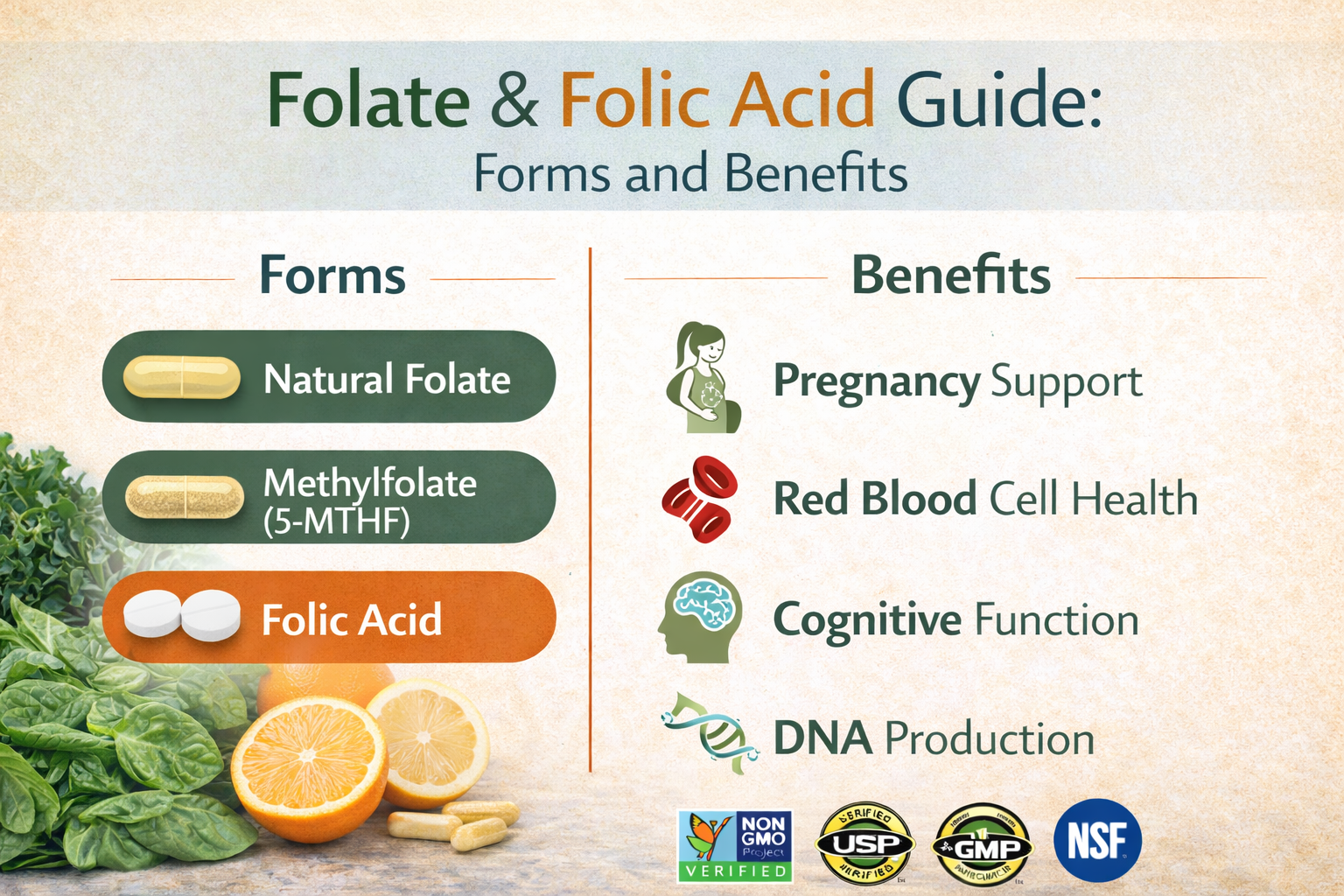
Quick Answer: Folate Folic Acid is the natural form of vitamin B9 found in food, while folic acid is the synthetic form used in supplements and fortified foods. For most people, methyl folate (5-MTHF) is the best supplemental form because it’s already active and bypasses genetic variations that affect folic acid conversion. The UK recommends 400 mcg daily for adults, rising to 400 mcg supplemental folic acid before conception and during early pregnancy to prevent neural tube defects.
Folate and folic acid are often used interchangeably, but they’re not the same thing—and the difference matters more than many people realize. Folate is the naturally occurring form of vitamin B9 found in leafy greens and legumes, while folic acid is its synthetic counterpart. Your body must convert folic acid into its active form before using it, and not everyone does this efficiently.
This distinction has significant implications for your health. Folate is essential for DNA synthesis, cell division, and a critical biochemical process called methylation that influences everything from energy production to mood regulation. During pregnancy, adequate folate is vital for preventing serious birth defects—which is why folic acid supplementation is so strongly recommended for women trying to conceive.
But here’s where it gets more nuanced: up to 40% of the population carries genetic variations that reduce their ability to convert folic acid into usable folate. For these individuals, taking folic acid may be less effective than taking methyl folate—the body’s preferred active form.
This guide covers everything you need to know about folate and folic acid: the key differences between forms, who needs which type, how much you need at different life stages, signs of deficiency, and how to choose the right supplement. Whether you’re planning a pregnancy, addressing fatigue, or simply optimizing your B vitamin intake, understanding folate is essential.

🎬 Watch: An overview of folate, folic acid, and why the form you choose matters.
📜 Prefer reading? Scroll down for the complete guide.
What Is Folate and How Does It Work?
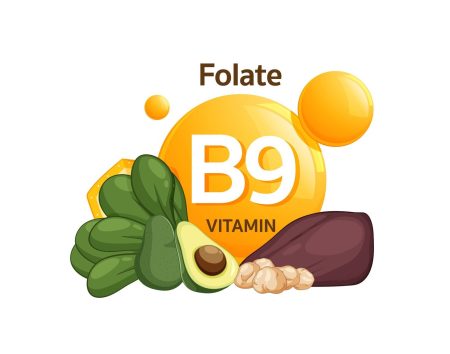
Folate is a water-soluble B vitamin (vitamin B9) that your body requires for some of its most fundamental processes. Unlike fat-soluble vitamins that can be stored for months, folate must be obtained regularly through diet or supplementation because your body only maintains a limited reserve.
DNA Synthesis and Cell Division
Every time a cell divides—which happens billions of times daily—it must replicate its entire DNA. Folate is essential for synthesizing the building blocks of DNA (thymidine and purine nucleotides). Without adequate folate, DNA replication becomes error-prone, and rapidly dividing cells are affected first.
This is why folate deficiency initially affects cells that divide quickly: red blood cells, immune cells, and cells lining the digestive tract. It’s also why folate is so critical during pregnancy, when foetal cells are dividing at an extraordinary rate.
The Methylation Cycle
Perhaps folate’s most far-reaching role involves a biochemical process called methylation. In its active form (5-methyltetrahydrofolate or 5-MTHF), folate donates a methyl group (CH₃) to convert homocysteine into methionine. This reaction is crucial for several reasons:
- Homocysteine regulation: High homocysteine levels are associated with cardiovascular disease, cognitive decline, and pregnancy complications. Folate helps keep homocysteine in check.
- Methionine and SAMe production: Methionine is converted to S-adenosylmethionine (SAMe), the body’s primary methyl donor. SAMe is required for synthesizing neurotransmitters, regulating gene expression, and maintaining cell membranes.
- Neurotransmitter synthesis: Methylation is essential for producing serotonin, dopamine, and norepinephrine—neurotransmitters that regulate mood, motivation, and cognition.
Red Blood Cell Formation
Folate works alongside vitamin B12 to produce healthy red blood cells. When folate is deficient, red blood cells become abnormally large (megaloblastic) and cannot function properly, leading to a specific type of anaemia. This connection between folate, B12, and red blood cell production is why both nutrients are often assessed together when investigating fatigue or anaemia.
💡 Tip: Folate and B12 work as a team. A deficiency in one can mask or worsen a deficiency in the other. If you’re supplementing folate, ensure your B12 status is also adequate—particularly if you’re vegetarian or over 50.
Folate Folic Acid Guide: Understanding the Key Difference
The terms “folate” and “folic acid” are often used interchangeably, but they refer to different forms of vitamin B9 with distinct properties. Understanding this difference is essential for choosing the right supplement.
Folate: The Natural Form
Folate is the umbrella term for naturally occurring forms of vitamin B9 found in food. When you eat leafy greens, legumes, or citrus fruits, you’re consuming various folate compounds that your body can use relatively efficiently.
Food folates exist mainly as polyglutamates—chains of glutamate molecules attached to the folate core. During digestion, enzymes in your intestine remove these chains, allowing absorption. Food folates are generally well-absorbed, though cooking and processing can destroy a significant portion.
Folic Acid: The Synthetic Form
Folic acid is the synthetic form of vitamin B9 used in supplements and food fortification (such as fortified cereals and flour in some countries). It was developed because it’s more stable than natural folates and easier to manufacture consistently.
However, folic acid is not biologically active. Your body must convert it through a multi-step process:
- Folic acid is reduced to dihydrofolate (DHF)
- DHF is reduced to tetrahydrofolate (THF)
- THF is converted to 5,10-methylenetetrahydrofolate
- Finally, the enzyme MTHFR converts it to 5-methyltetrahydrofolate (5-MTHF)—the active form
This conversion process is where problems can arise. The final step—catalysed by the MTHFR enzyme—is rate-limiting, and genetic variations in the MTHFR gene can significantly reduce conversion efficiency.
Why This Difference Matters
For people with normal MTHFR function, folic acid works reasonably well—it’s inexpensive and has decades of research supporting its use in preventing neural tube defects. However:
- Slow conversion: Even with normal genetics, folic acid conversion is relatively slow. High doses can result in unmetabolized folic acid circulating in the blood, with uncertain long-term effects.
- MTHFR variations: Up to 40% of the population carries MTHFR gene variations that reduce conversion efficiency by 20–70%. For these individuals, folic acid may be significantly less effective.
- Potential concerns: Some research has raised questions about whether high circulating folic acid might have negative effects, though this remains an area of active investigation.
The Active Alternative: Methylfolate
Methylfolate (5-MTHF, 5-methyltetrahydrofolate) is the biologically active form of folate—the end product of folic acid conversion. When you take methylfolate, you bypass the entire conversion process, including the MTHFR step.
This makes methylfolate particularly valuable for individuals with MTHFR variations, but it’s increasingly recommended as a preferred form for anyone seeking optimal folate supplementation.
✓ Key Takeaway
- Folate = natural forms in food
- Folic acid = synthetic, requires conversion, widely used in supplements and fortification
- Methylfolate = active form, no conversion needed, works for everyone including those with MTHFR variations
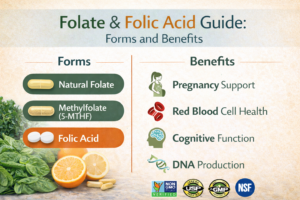
Forms of Folate Supplements: Which Is Best?
The supplement market offers several forms of vitamin B9, each with distinct characteristics. Understanding these differences helps you choose the most effective option for your situation.
| Form | Bioavailability | Best For | Conversion Required? | Notes |
|---|---|---|---|---|
| 5-MTHF (Methylfolate) | ●●●●● Excellent | Anyone; essential for MTHFR variants | No—already active | Preferred form; higher cost |
| Folic Acid | ●●●○○ Moderate | Those with normal MTHFR; budget option | Yes—multiple steps | NHS standard; proven for NTD prevention |
| Folinic Acid (5-formyl THF) | ●●●●○ High | Medical settings; some MTHFR cases | Minimal conversion | Bypasses most conversion; used clinically |
| Calcium L-Methylfolate | ●●●●● Excellent | Same as 5-MTHF; specific salt form | No | Branded as Metafolin®; well-researched |
| Quatrefolic® (glucosamine salt) | ●●●●● Excellent | Same as 5-MTHF; premium option | No | Claims enhanced stability; branded form |
Pros and Cons Comparison
✓ Methylfolate (5-MTHF) Pros
- Already in active form—works immediately
- Bypasses MTHFR enzyme completely
- No unmetabolised folic acid concerns
- Effective for everyone regardless of genetics
- May better support methylation and mood
✗ Methylfolate (5-MTHF) Cons
- More expensive than folic acid
- Less long-term research than folic acid
- Some people experience initial side effects
- Less stable—proper storage important
✓ Folic Acid Pros
- Very affordable and widely available
- Decades of research; proven for NTD prevention
- Highly stable in supplements
- NHS recommended and prescribed
- Works well for many people
✗ Folic Acid Cons
- Requires multiple conversion steps
- Less effective for MTHFR variants (40% of population)
- May accumulate as unmetabolised folic acid
- Long-term high-dose effects uncertain
🧬 Best for MTHFR Variants
Methylfolate (400–800 mcg)
Bypasses the problematic conversion step entirely
🤰 Best for Pregnancy
Methylfolate or Folic Acid (400+ mcg)
Both proven effective; methylfolate if MTHFR-positive
💰 Best Budget Option
Folic Acid (400 mcg)
Effective for most people; very affordable
The MTHFR Factor: Why Genetics Matter
MTHFR (methylenetetrahydrofolate reductase) is an enzyme that performs the final step in converting folic acid to its active form, 5-MTHF. Variations in the MTHFR gene are remarkably common and can significantly affect how efficiently you process folic acid.
Understanding MTHFR Variants
Two MTHFR gene variants have been extensively studied:
C677T variant: The most clinically significant. Having one copy (heterozygous) reduces enzyme activity by approximately 35%. Having two copies (homozygous) reduces activity by approximately 70%. About 10–15% of Caucasian populations are homozygous for this variant.
A1298C variant: Generally has a milder effect, reducing enzyme activity by approximately 20–35% when homozygous. However, having one copy of each variant (compound heterozygous) can have effects similar to being homozygous for C677T.
What MTHFR Variations Mean Practically
If you have reduced MTHFR function:
- Folic acid works less efficiently: You convert less of it to the active form you need
- Homocysteine may be elevated: Less efficient methylation means homocysteine isn’t cleared as effectively
- Methylfolate may work better: It bypasses the MTHFR step entirely
- Higher folate needs may exist: Some individuals benefit from higher intakes to compensate
Should You Get Tested?
MTHFR testing is available through private labs in the UK, though it’s not routinely offered on the NHS. Whether to test depends on your situation:
Consider testing if you have:
- Elevated homocysteine levels
- History of neural tube defect-affected pregnancy
- Recurrent pregnancy loss
- Family history of cardiovascular disease at young ages
- Depression or mood issues that haven’t responded to standard treatments
Or simply choose methylfolate: For many people, switching to methylfolate regardless of MTHFR status is the pragmatic approach. It works for everyone, avoids the conversion bottleneck, and the cost difference has narrowed significantly.
⚠️ Important: MTHFR variations are common and usually don’t cause problems when folate intake is adequate. Having an MTHFR variant doesn’t mean you have a disease—it means your folate metabolism may benefit from the right form of supplementation. Avoid practitioners who over-dramatise MTHFR status or recommend excessive testing and supplements.
Signs of Folate Deficiency
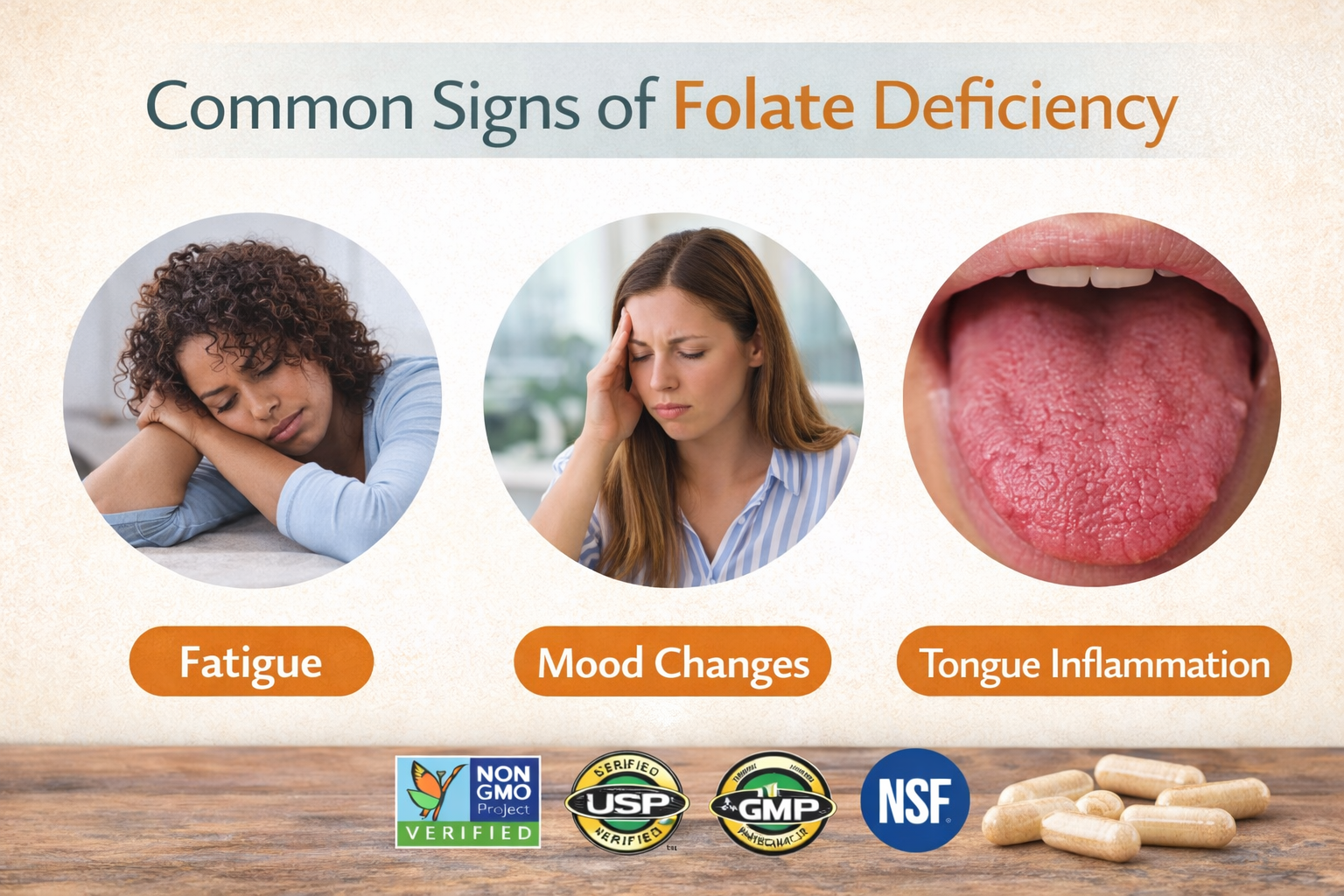
Folate deficiency can develop gradually over weeks to months since the body only stores enough folate to last 2–4 months. Because folate is involved in so many processes, deficiency symptoms can be wide-ranging and sometimes subtle.
| Stage | Signs of Folate Deficiency | Action |
|---|---|---|
| 🟡 Early/Mild | Fatigue, irritability, difficulty concentrating, reduced appetite, headaches, mild mood changes | Increase dietary folate; consider testing |
| 🟠 Moderate | Sore, swollen tongue (glossitis), mouth ulcers, forgetfulness, pale skin, shortness of breath, palpitations | See GP for blood tests; likely need supplements |
| 🔴 Severe | Megaloblastic anaemia, significant weakness, neurological symptoms (less common than B12), depression, cognitive impairment | Seek prompt medical attention |
The Folate-B12 Overlap
Many folate deficiency symptoms overlap with vitamin B12 deficiency—both cause megaloblastic anaemia and fatigue. Importantly, taking folate when you’re actually B12 deficient can mask the anaemia while allowing B12-related neurological damage to progress unchecked. This is why testing both nutrients is essential before starting supplementation.
Testing for Folate Deficiency
Your GP can order blood tests to assess folate status:
- Serum folate: Reflects recent intake (last few days); can fluctuate with meals
- Red blood cell (RBC) folate: Better indicator of long-term folate status; reflects intake over previous 2–3 months
- Homocysteine: Elevated levels may indicate functional folate (or B12/B6) insufficiency
If you’re experiencing symptoms suggestive of deficiency, request both folate and B12 testing together.
Who Needs More Folate?
While everyone requires adequate folate, certain groups have increased needs or face higher deficiency risk.
Women Planning Pregnancy or Pregnant
This is the most critical group for folate supplementation. Neural tube defects (such as spina bifida and anencephaly) can develop in the first 28 days after conception—often before a woman knows she’s pregnant. The NHS recommends:
- Before conception: 400 mcg folic acid daily from the time you stop contraception
- During pregnancy: Continue until at least week 12
- Higher-risk women: 5 mg daily if you’ve had a previous NTD-affected pregnancy, have diabetes, take anti-epileptic medications, or have BMI over 30
For comprehensive pregnancy nutrition, see our guide to prenatal vitamins in the UK.
People with MTHFR Variants
Those with reduced MTHFR enzyme activity may need methylfolate rather than folic acid, and some may benefit from higher intakes than the general population.
Digestive Conditions
Conditions affecting the small intestine—where folate is absorbed—increase deficiency risk:
- Coeliac disease
- Inflammatory bowel disease (Crohn’s, ulcerative colitis)
- Gastric bypass surgery
Alcohol Consumption
Regular alcohol intake reduces folate absorption and increases urinary excretion. Heavy drinkers are at significant risk of deficiency.
Certain Medications
Several medications interfere with folate metabolism:
- Methotrexate: Used for rheumatoid arthritis and some cancers; directly inhibits folate metabolism
- Anti-epileptic drugs: Phenytoin, carbamazepine, valproate can reduce folate levels
- Sulfasalazine: Used for inflammatory bowel disease and rheumatoid arthritis
- Metformin: Long-term use may reduce folate and B12 absorption
Older Adults
Dietary intake often decreases with age, and absorption may become less efficient. Combined with other risk factors, older adults should ensure adequate folate intake.
How Much Folate Do You Need Daily?
Folate requirements vary by age, sex, and life stage. The UK uses Reference Nutrient Intakes (RNIs), while supplement labels often use Dietary Folate Equivalents (DFEs) to account for the higher bioavailability of folic acid compared to food folate.
| Population | UK RNI | Supplement Range | Upper Limit |
|---|---|---|---|
| Adults (19+) | 200 mcg | 200–400 mcg | 1,000 mcg (folic acid) |
| Women planning pregnancy | 200 mcg + 400 mcg supplement | 400 mcg (mandatory) | 1,000 mcg |
| Pregnancy (first trimester) | 300 mcg + supplement | 400 mcg (continue) | 1,000 mcg |
| High-risk pregnancy* | As advised | 5 mg (prescription) | Per medical advice |
| Breastfeeding | 260 mcg | 200–400 mcg | 1,000 mcg |
| MTHFR variants | 200 mcg (same RNI) | 400–800 mcg methylfolate | 1,000 mcg |
*High-risk includes previous NTD-affected pregnancy, diabetes, BMI >30, anti-epileptic medication use, or family history of NTDs
Understanding Folate Equivalents
Because synthetic folic acid is more readily absorbed than food folate, nutrition labels sometimes use Dietary Folate Equivalents (DFEs):
- 1 mcg food folate = 1 mcg DFE
- 1 mcg folic acid (with food) = 1.7 mcg DFE
- 1 mcg folic acid (empty stomach) = 2 mcg DFE
For methylfolate, bioavailability is considered similar to or better than folic acid, though specific conversion factors are still being established.
Food Sources of Folate
A diet rich in folate-containing foods provides the foundation for adequate status, though supplements remain important for pregnancy and certain individuals.
| Food | Serving Size | Folate Content | % Daily Value* |
|---|---|---|---|
| Liver (beef, cooked) | 85g | 215 mcg | 107% |
| Lentils (cooked) | 100g | 181 mcg | 90% |
| Spinach (cooked) | 90g (½ cup) | 131 mcg | 66% |
| Chickpeas (cooked) | 100g | 172 mcg | 86% |
| Asparagus (cooked) | 90g (6 spears) | 134 mcg | 67% |
| Brussels sprouts (cooked) | 80g (½ cup) | 78 mcg | 39% |
| Avocado | ½ medium | 82 mcg | 41% |
| Orange | 1 large | 55 mcg | 28% |
| Broccoli (cooked) | 80g | 52 mcg | 26% |
*Based on adult Reference Nutrient Intake (RNI) of 200 mcg per day
Maximising Folate from Food
Food folate is sensitive to heat, light, and prolonged storage. To retain more:
- Eat some vegetables raw or lightly steamed rather than boiled
- Store vegetables properly—cool, dark conditions preserve folate
- Use cooking water in soups or sauces if you do boil vegetables
- Don’t overcook—prolonged cooking destroys more folate
- Eat fresh when possible—folate degrades during storage
Note: While liver is folate-rich, pregnant women should avoid it due to high vitamin A content, which can be harmful in excess during pregnancy.
Folate Synergies: B12, Iron, and Beyond
Folate works in concert with other nutrients, and understanding these relationships helps optimise your supplementation strategy.
| Combination | Synergy Type | How They Work Together | Evidence |
|---|---|---|---|
| Folate + Vitamin B12 | 🔗 Essential | B12 is required to regenerate active folate; both needed for homocysteine metabolism and red blood cell production | ⭐⭐⭐⭐ Strong |
| Folate + Iron | 🔗 Cofactor | Both essential for red blood cell production; deficiency in either causes anaemia | ⭐⭐⭐⭐ Strong |
| Folate + Vitamin B6 | ⚡ Activation | B6 works with folate and B12 in homocysteine metabolism; all three needed for optimal methylation | ⭐⭐⭐ Good |
| Folate + Vitamin C | 🛡️ Protection | Vitamin C helps protect folate from oxidation and may enhance absorption | ⭐⭐ Moderate |
| Folate + Riboflavin (B2) | ⚡ Activation | Riboflavin is a cofactor for the MTHFR enzyme; supports folate activation | ⭐⭐⭐ Good |
The Critical Folate-B12 Partnership
Folate and vitamin B12 are biochemically intertwined. B12 is required for the enzyme (methionine synthase) that regenerates active tetrahydrofolate from 5-methylTHF. Without adequate B12, folate becomes “trapped” in an unusable form—a phenomenon called the “methyl trap.”
This interdependence has practical implications:
- Deficiency in one can functionally impair the other
- High folate intake can mask B12 deficiency anaemia while neurological damage continues
- Both should be tested when investigating anaemia or fatigue
- Supplementing both together (as in a B-complex) makes sense for most people
Folate and Iron for Blood Health
Both folate and iron are essential for producing healthy red blood cells—but through different mechanisms. Iron provides the oxygen-carrying haemoglobin, while folate enables DNA synthesis for cell division. Deficiency in either causes anaemia, and both are common in the same populations (women of reproductive age, vegetarians).
If you’re taking iron for deficiency, ensure folate and B12 status is also adequate for complete blood health support.
✓ Complete B-Vitamin Strategy
- Consider a B-complex supplement rather than isolated folate
- Ensure B12 is included (especially important for vegetarians/vegans)
- Look for methylated forms: methylfolate + methylcobalamin (B12) + P5P (B6)
- If taking high-dose folate alone, monitor B12 status
Safety Considerations and Precautions
Folate is generally very safe, even at higher doses, but there are important considerations to be aware of.
The B12 Masking Concern
The most significant concern with high-dose folic acid supplementation is its ability to correct the anaemia of B12 deficiency while allowing neurological damage to progress undetected. This is why:
- The UK sets an upper limit of 1,000 mcg (1 mg) for folic acid from supplements
- Testing B12 before starting high-dose folate is advisable, especially for older adults
- Taking B12 alongside folate eliminates this concern
Note: This concern applies primarily to folic acid. Methylfolate may be less likely to mask B12 deficiency, though the research is still developing.
Medication Interactions
| Medication | Interaction | Recommendation |
|---|---|---|
| Methotrexate | IMPORTANT | Methotrexate works by blocking folate metabolism. Taking folate supplements is often recommended to reduce side effects, but must be managed by your prescriber. Don’t self-supplement without medical guidance. |
| Anti-epileptic drugs (phenytoin, carbamazepine) | MODERATE | These drugs reduce folate levels AND high-dose folate may reduce drug effectiveness. Supplementation should be discussed with your neurologist. |
| Sulfasalazine | MODERATE | Reduces folate absorption. Your prescriber may recommend folate supplementation. |
| Metformin (long-term use) | LOW | May reduce B12 and possibly folate absorption over time. Periodic monitoring advisable. |
Methylfolate-Specific Considerations
Some individuals experience side effects when starting methylfolate, particularly at higher doses:
- Irritability or anxiety
- Insomnia
- Headaches
- Muscle aches
These effects are sometimes called “overmethylation” symptoms and may occur in people with certain genetic profiles or when methylation suddenly increases. If you experience these, try:
- Starting with a lower dose (200 mcg) and increasing gradually
- Taking methylfolate with food
- Splitting the dose throughout the day
- Consulting with a practitioner knowledgeable about methylation
🚨 Warning: If you take methotrexate for cancer, rheumatoid arthritis, or psoriasis, do not supplement with folate without explicit guidance from your prescribing doctor. Folate can interfere with methotrexate’s intended mechanism, potentially reducing its effectiveness.
How to Choose a Quality Folate Supplement
The UK supplement market offers various folate products at different price points. Understanding what distinguishes quality helps you make an informed choice.
✅ Quality Checklist: What to Look For
- ☐ Preferred form — Methylfolate (5-MTHF, L-methylfolate) for optimal bioavailability; folic acid acceptable for budget
- ☐ Branded ingredients — Metafolin® or Quatrefolic® indicate quality-controlled methylfolate
- ☐ Appropriate dose — 400–800 mcg for most adults; higher only if specifically needed
- ☐ Includes B12 — Essential partner nutrient; look for methylcobalamin form
- ☐ Third-party tested — Quality verification from independent labs
- ☐ No unnecessary additives — Minimal fillers, no artificial colours
- ☐ Clear labelling — Specifies exact form and dose per serving
- ☐ Suitable for your needs — Vegan, allergen-free, etc. as required
🚩 Red Flags to Avoid
- “Folate” without specifying form — Often just folic acid marketed with a trendy name
- Excessive doses — More than 1,000 mcg without medical supervision or indication
- Synthetic “L-methylfolate” of unknown origin — Branded forms (Metafolin®, Quatrefolic®) offer quality assurance
- Folate without B12 — Unless you’re supplementing B12 separately
- Unrealistic claims — “Cures depression” or similar unsupported statements
- Very cheap methylfolate — Quality 5-MTHF has inherent production costs
Folic Acid vs Methylfolate: Cost Considerations
Folic acid remains significantly cheaper than methylfolate. A 3-month supply of folic acid might cost £3–5, while quality methylfolate could cost £15–25 for the same period. The decision depends on your priorities:
- Choose folic acid if: Budget is primary concern, you have no known MTHFR issues, and you tolerate it well
- Choose methylfolate if: You have MTHFR variants, want optimal bioavailability, or have concerns about unmetabolised folic acid
Products Worth Considering
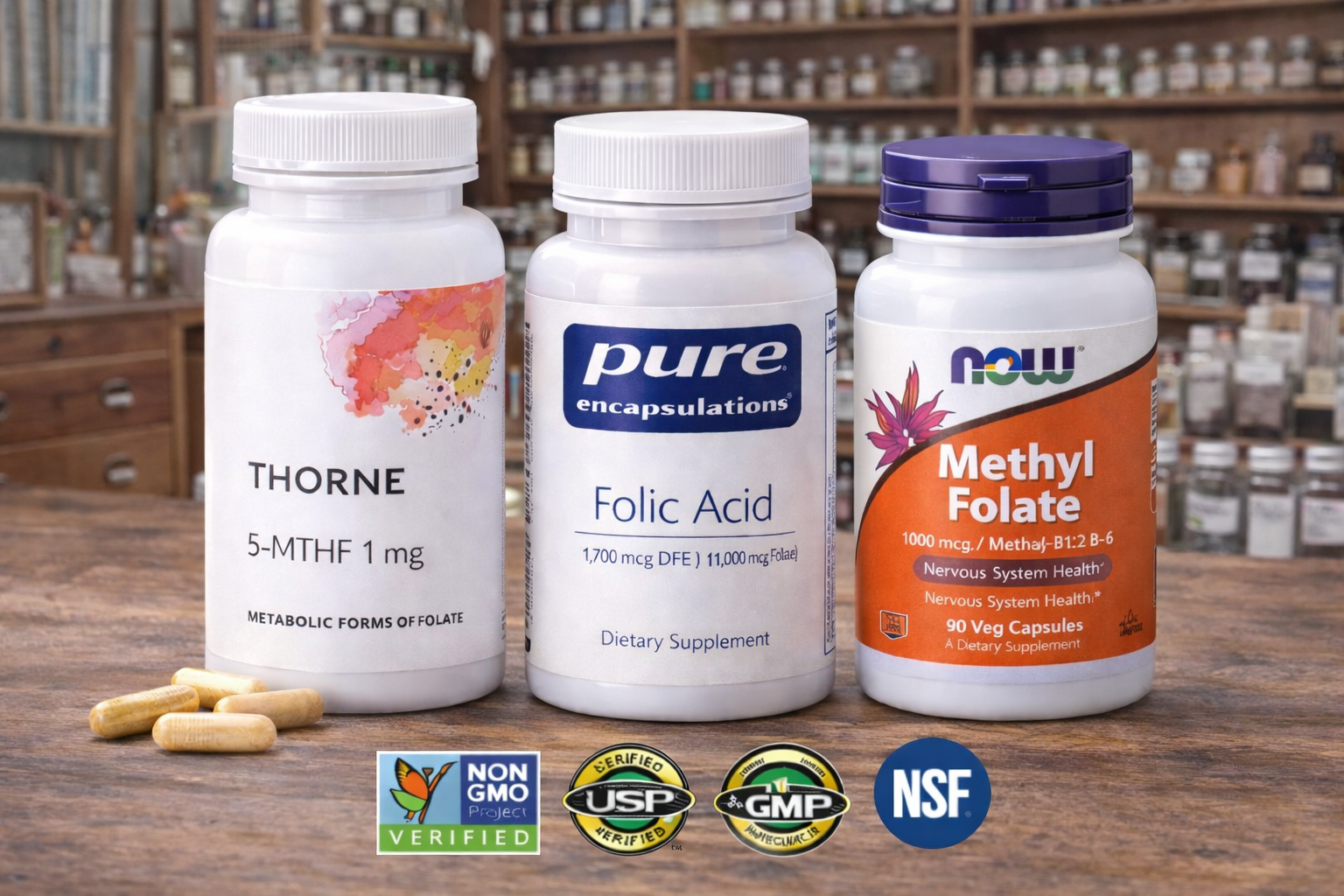
Jarrow Formulas Active Folate (Vitamin B9) 400 µg – 60 Capsules
Cardiovascular and Neurologic Health support supplement: Contains one 60 count bottle of Jarrow Formulas Extra Strength Methyl Folate 400 mcg Veggie Capsules for a 60-day supply
- Features Quatrefolic methyl folate that can cross the blood-brain barrier*
- A Highly Bioactive Form Of Folate
- Quatrefolic®
- Increased Stability & Bioavailability
- Extra Strength, 400mcg of Folate Per Serving
Folate + B12 Methylated Complex
Combines methylfolate with methylcobalamin (active B12) for complete methylation support. Perfect for those wanting to optimise both nutrients together.
- 400 mcg methylfolate + 500 mcg methylcobalamin (B12)
- Both nutrients in their active methylated forms
- Supports red blood cell production and methylation
- Particularly suitable for vegetarians/vegans
- Once-daily sublingual tablet for enhanced absorption
Frequently Asked Questions
What is the difference between folate and folic acid?
Folate is the natural form of vitamin B9 found in foods like leafy greens and legumes. Folic acid is the synthetic form used in supplements and fortified foods. While both provide vitamin B9, folic acid must be converted through multiple steps (including the MTHFR enzyme) to become active in your body. Up to 40% of people have genetic variations that reduce this conversion efficiency, making methylfolate—the already-active form—a better choice for many individuals.
Is methylfolate better than folic acid?
For people with MTHFR gene variants (about 40% of the population), methylfolate is significantly more effective because it bypasses the problematic conversion step. For others, methylfolate still offers advantages: it’s immediately usable, doesn’t accumulate as unmetabolised folic acid, and may better support methylation. Folic acid works well for many people and is considerably cheaper, making it a reasonable choice if budget is a primary concern and you don’t have known MTHFR issues.
How much folate do I need during pregnancy?
The NHS recommends 400 mcg of folic acid daily from the time you stop contraception until at least week 12 of pregnancy. Higher doses (5 mg, prescription-only) are recommended for women with previous NTD-affected pregnancies, diabetes, BMI over 30, or those taking certain anti-epileptic medications. Many prenatal vitamins contain 400–800 mcg. Taking folate before conception is crucial because neural tube development occurs in the first 28 days—often before you know you’re pregnant.
What are the signs of folate deficiency?
Common signs include fatigue, weakness, irritability, difficulty concentrating, forgetfulness, and reduced appetite. As deficiency progresses, you may develop a sore or swollen tongue (glossitis), mouth ulcers, pale skin, shortness of breath, and heart palpitations. Severe deficiency causes megaloblastic anaemia—characterised by abnormally large, immature red blood cells. Many symptoms overlap with B12 deficiency, so both should be tested together.
Should I get tested for MTHFR mutations?
Testing isn’t necessary for everyone. Consider it if you have elevated homocysteine, a history of NTD-affected pregnancy, recurrent miscarriages, or mood issues that haven’t responded to standard treatments. However, a simpler approach for many people is to simply choose methylfolate over folic acid—it works for everyone regardless of MTHFR status, so you gain the benefits without needing genetic testing.
Can I take too much folate?
The main concern with high-dose folic acid is masking B12 deficiency—the anaemia improves while neurological damage continues. This is why the UK sets an upper limit of 1,000 mcg for supplemental folic acid. Taking B12 alongside folate eliminates this concern. Methylfolate may be safer at higher doses in this regard, though research is ongoing. For most people, 400–800 mcg daily is sufficient and well within safe limits.
Final Thoughts
Understanding the difference between folate and folic acid isn’t just academic—it has real implications for how effectively you can support your health. While folic acid has decades of research behind it and works well for many people, methylfolate offers advantages that make it the preferred choice for a significant portion of the population.
If you’re planning a pregnancy, addressing fatigue, supporting methylation, or simply optimising your B-vitamin intake, folate deserves attention. The key considerations are:
- Form matters: Methylfolate bypasses genetic conversion issues and works for everyone
- B12 is essential: Always consider B12 status alongside folate—they work as a team
- Pregnancy requires planning: Start supplementation before conception for maximum protection
- Testing clarifies: Blood tests can confirm deficiency and guide appropriate supplementation
For most people seeking to optimise folate status, a quality methylfolate supplement combined with methylcobalamin (B12) offers the most universally effective approach. Those on a tighter budget who don’t have known MTHFR variants can use folic acid confidently, particularly when combined with adequate B12.
If you’re taking medications that interact with folate, have complex health conditions, or aren’t sure which approach is right for you, discuss your options with your GP or a qualified nutritional practitioner who can provide personalised guidance.
Sources
- NHS. “Folic acid.” NHS Choices. NHS — Folic Acid
- NIH Office of Dietary Supplements. “Folate – Fact Sheet for Health Professionals.” NIH ODS. NIH ODS — Fact Sheets
- British Dietetic Association. “Folic acid.” Food Fact Sheets. BDA — Folate
- Scaglione F, Panzavolta G. “Folate, folic acid and 5-methyltetrahydrofolate are not the same thing.” Xenobiotica. PubMed — Folate Forms
- Tsang BL et al. “Assessing the association between the methylenetetrahydrofolate reductase (MTHFR) 677C>T polymorphism and blood folate concentrations.” Am J Clin Nutr. PubMed — MTHFR Research
- Harvard T.H. Chan School of Public Health. “Folate (Folic Acid).” The Nutrition Source. Harvard Health — Folate
Written by Arsim Rama
Health Content Specialist · Last reviewed: January 2026
Affiliate Disclosure: This article may contain affiliate links. If you purchase through these links, we may earn a small commission at no extra cost to you. We only recommend products we believe in.
Medical Disclaimer: This article is for educational purposes only and does not constitute medical advice. Always consult your GP or qualified healthcare professional before making changes to your health regimen, especially during pregnancy or if taking medications.