
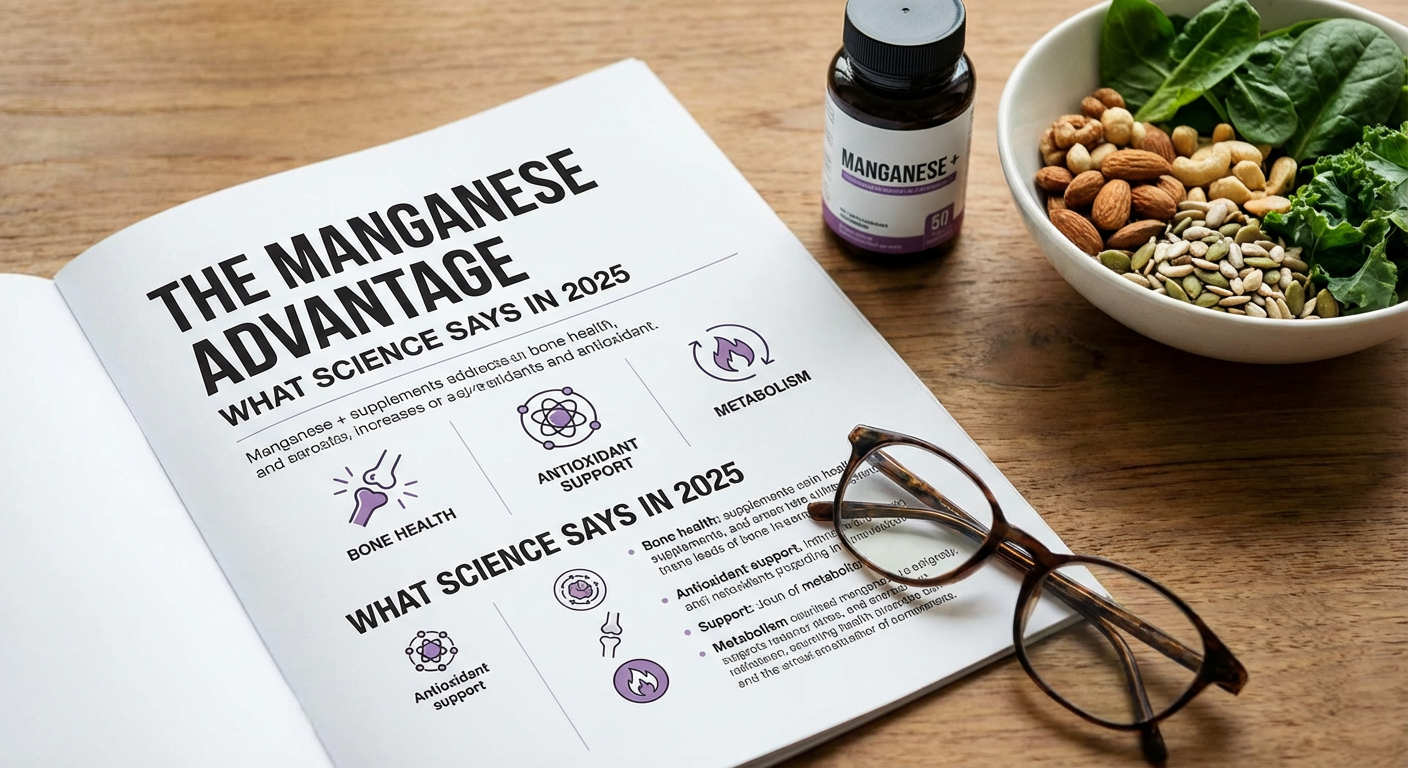
Quick Answer: The benefits of taking manganese include supporting bone health, enhancing antioxidant protection, aiding carbohydrate metabolism, promoting wound healing, and maintaining healthy brain function. Adults typically need 1.8–2.3mg daily.
🎯 Key Takeaways
- ✓ Manganese is essential for bone formation and helps prevent osteoporosis when combined with calciumand vitamin D
- ✓ This trace mineral activates manganese superoxide dismutase (MnSOD), one of your body’s most powerful antioxidant enzymes
- ✓ Most people obtain sufficient manganese through diet, but certain groups may benefit from supplementation
- ✓ The tolerable upper intake level is 11mg daily for adults—exceeding this may cause neurological symptoms
Editorial Note: This article provides general health information based on scientific research and is not intended as medical advice. Always consult a qualified healthcare professional before starting any new supplement, particularly if you have existing health conditions or take medications.
🎬 Watch: How to maximise absorption and avoid common pitfalls with your daily dose.
📜 Prefer reading: Scroll down for detailed explanations of each stress-reduction technique.
📖 In This Article
Introduction
Manganese rarely receives the attention given to minerals like iron or calcium, yet this trace element plays a surprisingly important role in human health. The benefits of taking manganese extend from strengthening your bones to protecting your cells against oxidative damage. According to the National Institutes of Health, manganese deficiency is rare but may contribute to impaired growth, skeletal abnormalities, and altered metabolism.
Your body contains approximately 10–20mg of manganese, primarily stored in the bones, liver, kidneys, and pancreas. Unlike some minerals that the body can produce or store in large quantities, manganese must be obtained regularly through diet or supplementation. For those wondering about essential trace minerals, manganese sits alongside zinc, copper, and selenium as critical micronutrients.
In this comprehensive guide, you will learn exactly how manganese functions in your body, the evidence-based benefits of supplementation, who might need extra manganese, and how to choose a quality supplement. Whether you are considering manganese for bone health, metabolic support, or antioxidant protection, this article provides the information you need to make an informed decision.

What Is Manganese?
Manganese is an essential trace mineral, meaning your body requires it in small amounts to function properly but cannot produce it independently. According to the NHS, manganese intake contributes to making and activating certain enzymes that help break down food, protect cells from damage, and build healthy bones and connective tissues.
This mineral exists in two main oxidation states in biological systems: Mn²⁺ and Mn³⁺. The body absorbs manganese primarily through the small intestine, though absorption rates vary significantly—typically between 1% and 5% of dietary intake. Foods particularly rich in manganese include whole grains, nuts, seeds, legumes, leafy vegetables, and tea. A single cup of cooked brown rice provides approximately 1.8mg, meeting most adults’ daily requirements.
| Aspect | Dietary Manganese | Supplemental Manganese |
|---|---|---|
| Absorption Rate | 1–5% (food matrix dependent) | Variable (form dependent) |
| Common Forms | Bound to food compounds | Sulfate, gluconate, bisglycinate |
| Best For | General population | Those with increased needs |
How Manganese Works in Your Body
Manganese intake serves as a cofactor for numerous enzymes, meaning it must be present for these enzymes to function correctly. The mineral participates in over 300 enzymatic reactions throughout the body, influencing everything from energy production to collagen synthesis. Understanding these mechanisms helps explain why the benefits of taking manganese affect so many different aspects of health.
Key Functions:
- Enzyme Activation: Manganese activates enzymes including arginase (urea cycle), pyruvate carboxylase (gluconeogenesis), and manganese superoxide dismutase (antioxidant defence)
- Bone Mineralisation: Works with calcium and phosphorus to form healthy bone matrix through activation of glycosyltransferases essential for proteoglycan synthesis
- Carbohydrate Metabolism: Supports gluconeogenesis and helps regulate blood glucose levels through enzyme activation in the liver
- Wound Healing: Promotes collagen production through its role in proline hydroxylase activity, essential for proper wound closure and tissue repair
The body tightly regulates manganese levels through a combination of controlled intestinal absorption and biliary excretion. When dietary intake is low, absorption efficiency increases; when intake is high, the liver excretes excess manganese through bile. This homeostatic mechanism helps prevent both deficiency and toxicity under normal circumstances.
Key Benefits of Taking Manganese
Scientific research has identified several evidence-based benefits associated with adequate manganese intake. For those interested in minerals for bone health, manganese deserves particular attention alongside calcium and vitamin D. The following benefits are supported by peer-reviewed research.
1. Supports Bone Health and Density
Manganese is essential for bone formation and maintenance. It activates enzymes required for synthesising glycosaminoglycans and proteoglycans—structural components of bone and cartilage. Research published in the Journal of Nutrition found that manganese supplementation, combined with calcium, copper, and zinc, helped slow spinal bone loss in postmenopausal women compared to calcium alone.
2. Provides Powerful Antioxidant Protection
Manganese superoxide dismutase (MnSOD) is one of the body’s primary antioxidant enzymes, found in mitochondria where it neutralises superoxide radicals produced during energy metabolism. Without adequate manganese, MnSOD activity decreases, potentially allowing oxidative damage to accumulate. This antioxidant function helps protect cells throughout the body, including those in the brain, heart, and liver.
3. Supports Healthy Blood Sugar Regulation
Manganese plays a role in glucose metabolism through its involvement in gluconeogenesis and insulin secretion. Some research suggests that people with diabetes tend to have lower blood manganese levels than those without the condition. According to the Mayo Clinic, manganese may help with blood sugar control, though more research is needed to establish definitive recommendations.
4. Promotes Brain Function and Neurological Health
The brain contains significant manganese concentrations, where the mineral supports neurotransmitter synthesis and neuronal function. Manganese is necessary for producing acetylcholine and influences dopamine and serotonin metabolism. Adequate levels support cognitive function, whilst both deficiency and excess can impair neurological health—highlighting the importance of appropriate intake.
5. Aids Wound Healing and Collagen Production
Collagen synthesis requires manganese as a cofactor for proline hydroxylase and other enzymes. Collagen provides structural support for skin, tendons, ligaments, and blood vessels. Adequate manganese intake supports efficient wound healing and may help maintain skin elasticity. This benefit links manganese to overall connective tissue health throughout the body.
Risks and Considerations
Whilst manganese is essential for health, excessive intake can cause serious adverse effects. The body has limited capacity to excrete very high manganese loads, making toxicity a genuine concern with over-supplementation or occupational exposure. Understanding these risks helps ensure safe and beneficial use.
Signs of Manganese Toxicity to Watch For
- Tremors, muscle stiffness, or movement difficulties
- Mood changes, irritability, or depression
- Cognitive difficulties including memory problems
- Headaches, fatigue, or sleep disturbances
Who Should Be Careful
- People with liver disease: The liver excretes manganese through bile; impaired liver function reduces excretion capacity and increases toxicity risk
- Those with iron deficiency anaemia: Iron and manganese share absorption pathways; iron deficiency increases manganese absorption significantly
- Individuals on total parenteral nutrition: Bypassing the gut’s regulatory mechanisms can lead to manganese accumulation
- Welders and miners: Occupational inhalation exposure adds to dietary intake and increases toxicity risk
The tolerable upper intake level (UL) for manganese is 11mg per day for adults. This limit applies to dietary and supplemental intake combined. Most supplements contain 2–10mg per serving, so those eating a manganese-rich diet should choose lower-dose supplements to avoid exceeding the UL.
5 Practical Tips for Taking Manganese
💡 Tip 1: Start with Food Sources First
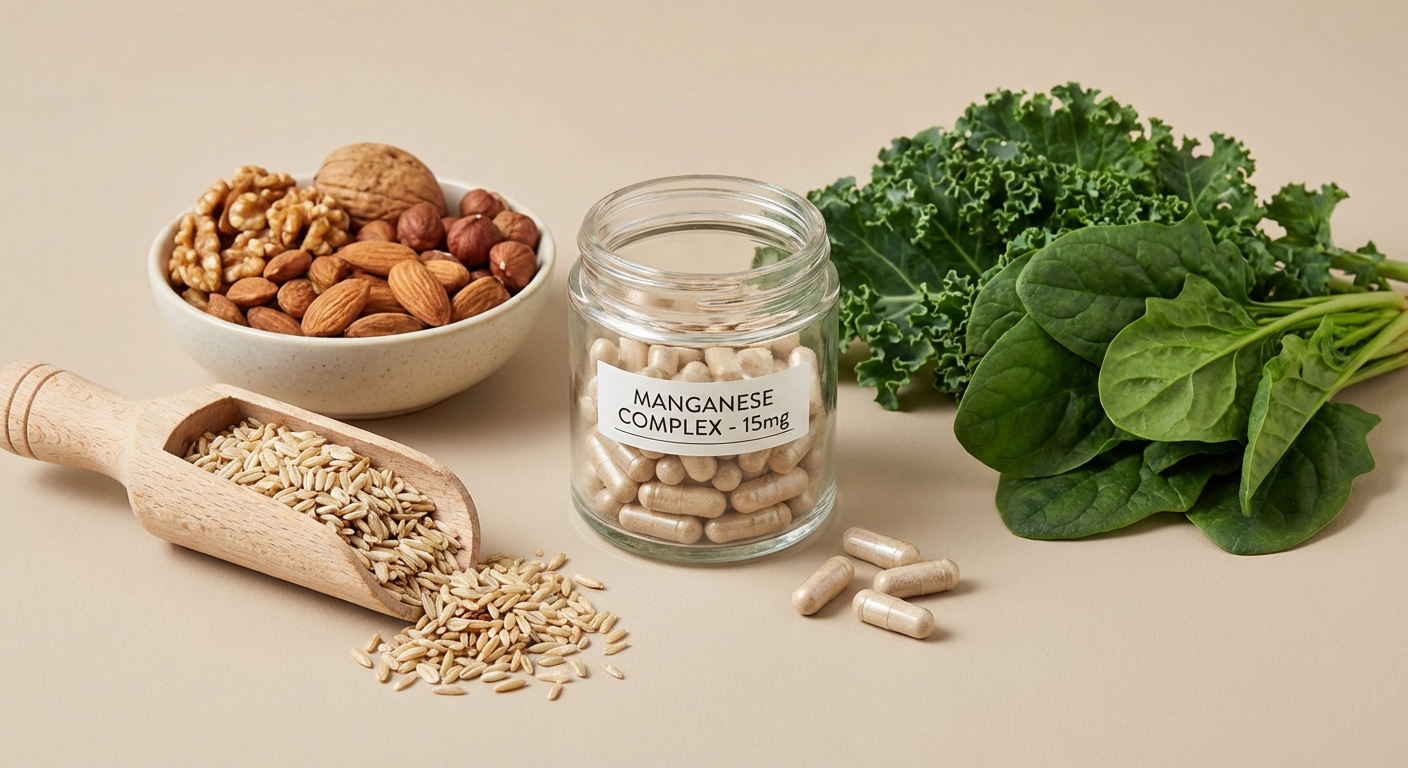
Before supplementing, assess your dietary manganese intake. Whole grains, nuts (especially pecans and hazelnuts), seeds, leafy greens, and tea provide substantial amounts. A balanced diet typically meets the adequate intake of 1.8–2.3mg daily for most adults.
💡 Tip 2: Choose Absorbable Forms
Manganese bisglycinate and manganese gluconate offer good bioavailability and are generally well-tolerated. Manganese sulfate is also effective but may cause digestive discomfort in some individuals. Chelated forms tend to be gentler on the stomach.
💡 Tip 3: Take with Food but Away from Iron
Taking manganese with food reduces the likelihood of stomach upset. However, avoid taking it simultaneously with iron supplements, as these minerals compete for absorption. Separate them by at least 2–3 hours for optimal uptake of both.
💡 Tip 4: Consider Multi-Mineral Formulas for Bone Health
Research on bone health often uses manganese in combination with calcium, copper, and zinc. If bone density is your primary concern, a comprehensive bone support formula may be more effective than isolated manganese supplementation.
💡 Tip 5: Monitor Your Total Intake
Check all your supplements for manganese content—it appears in many multivitamins and mineral complexes. Calculate your total daily intake from all sources to ensure you remain well below the 11mg upper limit, especially if you consume manganese-rich foods regularly.
What Research Shows About Manganese Benefits
Scientific investigation into manganese has produced meaningful insights into its health benefits, though research continues to evolve. Most studies focus on specific applications such as bone health, antioxidant function, and metabolic effects. Understanding the current evidence helps set realistic expectations for supplementation.
📊 Research Highlights:
- Strause et al., 1994: Found that postmenopausal women taking manganese with calcium, copper, and zinc experienced less spinal bone loss over two years compared to those taking calcium alone
- Finley et al., 2003: Demonstrated that manganese status affects antioxidant enzyme activity, with higher manganese intake associated with increased MnSOD activity
- Aschner et al., 2007: Reviewed manganese’s role in the central nervous system, noting its importance for normal brain function whilst highlighting toxicity risks at excessive levels
Whilst these studies support manganese’s biological importance, it is worth noting that clinical deficiency is rare in people eating varied diets. Much research focuses on populations with specific risk factors or uses manganese in combination with other nutrients. More randomised controlled trials examining isolated manganese supplementation in healthy populations would strengthen the evidence base. For related information on trace minerals, see our guide on zinc supplementation.
Summary
The benefits of taking manganese centre on its essential roles in bone health, antioxidant defence, metabolism, brain function, and wound healing. As a cofactor for numerous enzymes, manganese quietly supports processes throughout your body. Most people obtain adequate manganese through diet, but those with increased needs—including postmenopausal women concerned about bone density or individuals with limited dietary variety—may benefit from supplementation.
Choosing an appropriate supplement involves considering the form (bisglycinate and gluconate are well-absorbed), dosage (typically 2–10mg per serving), and your total intake from all sources. Quality products from reputable manufacturers provide reliable potency and purity. Below, we have selected three options that meet our editorial standards for those considering manganese supplementation.
⚠️ Important: This article is for educational purposes only. Consult your GP or healthcare professional before starting any supplement, particularly if you have liver disease, iron deficiency, or take medications that may interact with manganese.
Our Top Picks
Based on our research, here are 3 manganese supplements worth considering:

How to Choose
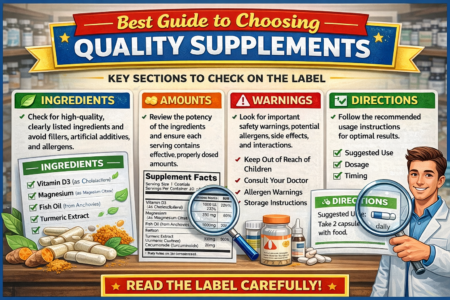
- Form: Bisglycinate and gluconate forms offer good absorption and tolerability; sulfate is effective but may cause digestive discomfort
- Dosage: Choose 2–8mg per serving if you eat a varied diet; higher doses suit those with documented deficiency or specific recommendations from a healthcare provider
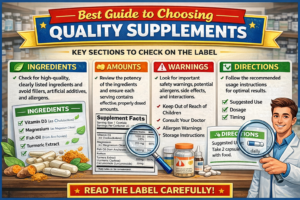
- Purity: Look for products free from unnecessary fillers, artificial colours, and common allergens, particularly if you have sensitivities
- Third-party testing: Supplements tested by independent laboratories provide assurance of potency and freedom from contaminants
Frequently Asked Questions
What are the main benefits of taking manganese?
The primary benefits include supporting bone health, providing antioxidant protection through MnSOD activation, aiding carbohydrate metabolism, promoting brain function, and helping with wound healing and collagen production.
How much manganese should I take daily?
The adequate intake is 2.3mg daily for men and 1.8mg for women. Supplements typically provide 2–10mg. Do not exceed 11mg daily from all sources combined to avoid toxicity risk.
Can I get enough manganese from food alone?
Yes, most people can meet their needs through diet. Excellent sources include whole grains, nuts, seeds, legumes, leafy greens, and tea. One cup of cooked brown rice provides approximately 1.8mg.
Is manganese safe to take every day?
Daily supplementation is generally safe when total intake remains below 11mg. People with liver disease should consult their doctor before supplementing, as impaired liver function reduces manganese excretion.
When is the best time to take manganese supplements?
Take manganese with food to reduce stomach upset. Avoid taking it at the same time as iron or calcium supplements, as these minerals compete for absorption. Separate by 2–3 hours.
What are signs of manganese deficiency?
True deficiency is rare but may cause impaired growth, skeletal abnormalities, altered carbohydrate and fat metabolism, and skin problems. If you suspect deficiency, consult your GP for proper assessment.
Sources
This article is based on peer-reviewed research and authoritative health sources:
✅ Why You Can Trust This Article
- Written by: Arsim Rama
- Research-backed: All claims supported by peer-reviewed sources and authoritative health organisations
- Regularly updated: Content reviewed every 12 months for accuracy
- Editorial independence: Product recommendations based on quality and merit, not commercial relationships
Last reviewed: January 2025. Next review: January 2026.
© 2025 Paulinna. All rights reserved.
⚠️ Disclosure: This article contains affiliate links. If you purchase through these links, we may earn a small commission at no extra cost to you.