
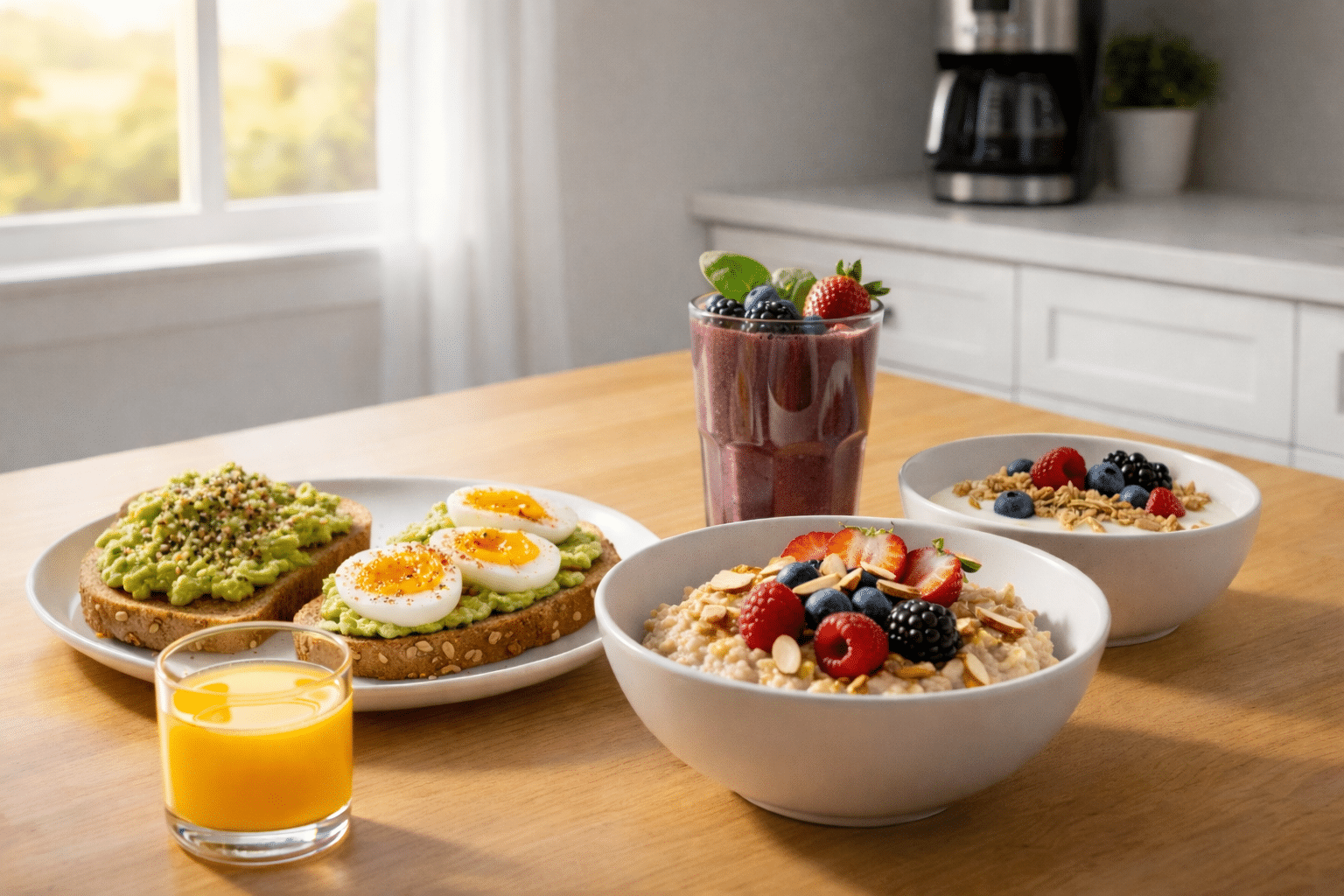
Quick Answer: Healthy breakfast ideas include overnight oats with berries, scrambled eggs with vegetables, Greek yoghurt with nuts, avocado toast on wholegrain bread, and smoothie bowls with protein. The best options combine complex carbohydrates, protein, and healthy fats to provide sustained energy throughout your morning.
Healthy breakfast ideas range from quick overnight oats and protein-rich eggs to nutrient-dense smoothie bowls and wholegrain toast combinations. The most effective morning meals balance macronutrients — protein, carbohydrates, and healthy fats — to stabilise blood sugar, support concentration, and prevent mid-morning energy crashes. Preparing nutritious breakfasts need not be time-consuming, with many options requiring just five to ten minutes or less.
Why Your Breakfast Choice Matters
Ten years ago, breakfast often meant rushing out the door with a sugary cereal bar or skipping the meal entirely. Today, nutrition research has transformed our understanding of how morning eating patterns influence everything from cognitive performance to long-term metabolic health. The shift towards evidence-based healthy breakfast ideas reflects growing awareness that what we eat first thing genuinely affects how we feel for hours afterwards.
Missing the right nutrients at breakfast could undermine your entire day’s potential. Research suggests that balanced morning meals support better concentration, more stable mood, and reduced likelihood of overeating later. For those concerned about iron intake and supplementation, breakfast presents an excellent opportunity to consume iron-rich foods like fortified cereals, spinach, or eggs alongside vitamin C sources that enhance absorption.
Your body functions like a gatekeeper in the morning, selectively processing nutrients based on what you provide. After overnight fasting, cells are primed to absorb glucose, amino acids, and micronutrients efficiently. Choosing whole foods over processed alternatives ensures this window benefits your health rather than triggering blood sugar spikes that leave you reaching for biscuits by 10am.
This guide presents fifteen practical healthy breakfast ideas suited to various lifestyles, time constraints, and dietary preferences. Whether you have five minutes or thirty, prefer sweet or savoury, or follow specific eating patterns, you will find options that genuinely work. Each suggestion includes the nutritional reasoning behind it, helping you make informed choices rather than following trends blindly.
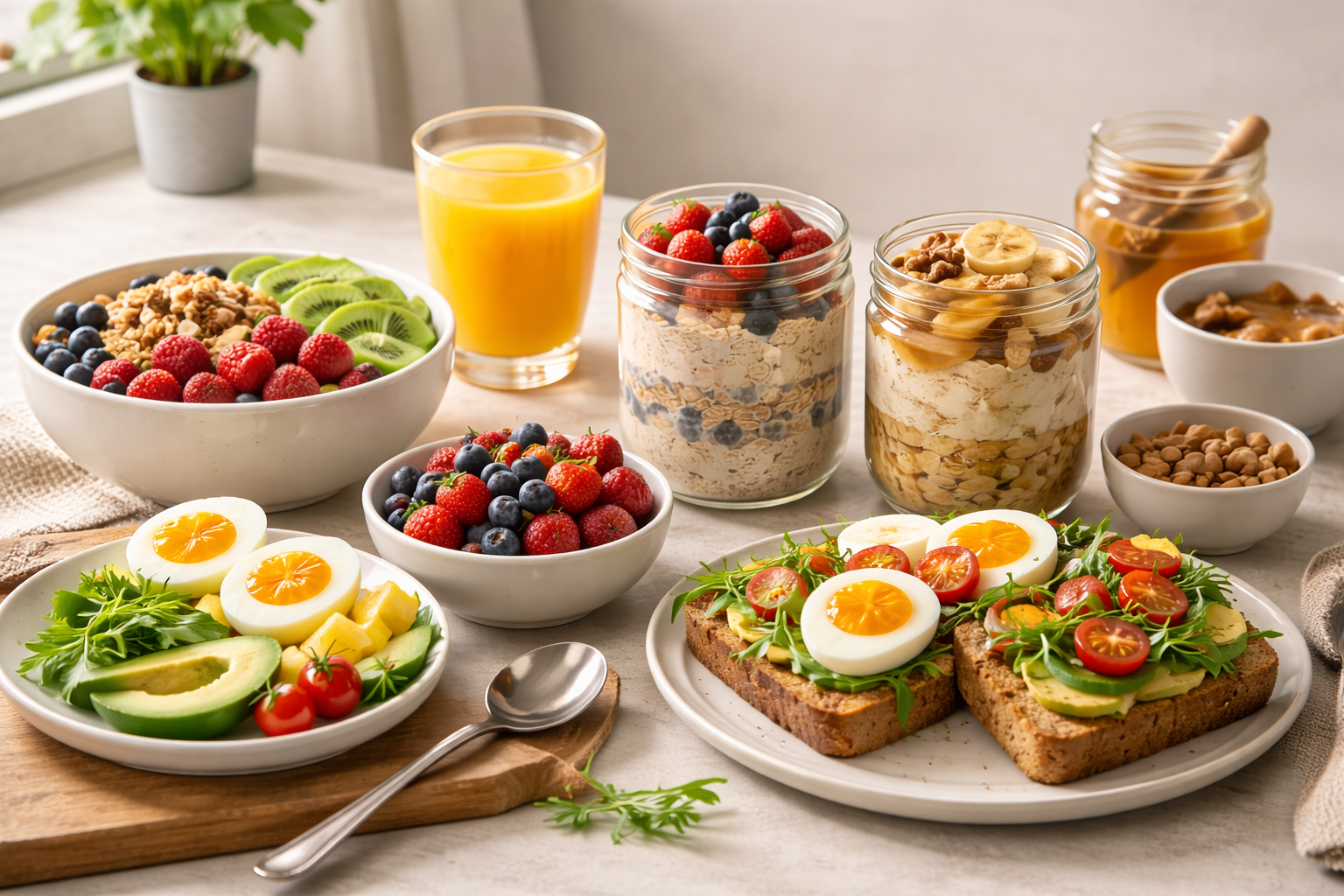
🎬 Watch: See how to prepare these healthy breakfast ideas quickly and easily.
📜 Prefer reading? Scroll down for the complete written guide.
Quick Healthy Breakfast Ideas for Busy Mornings
Time constraints represent the primary barrier to nutritious morning eating for most people. The good news is that healthy breakfast ideas need not require elaborate preparation. With strategic planning and the right recipes, you can enjoy genuinely nourishing meals in under ten minutes — some requiring virtually no morning effort at all.
Overnight Oats: The Zero-Effort Champion
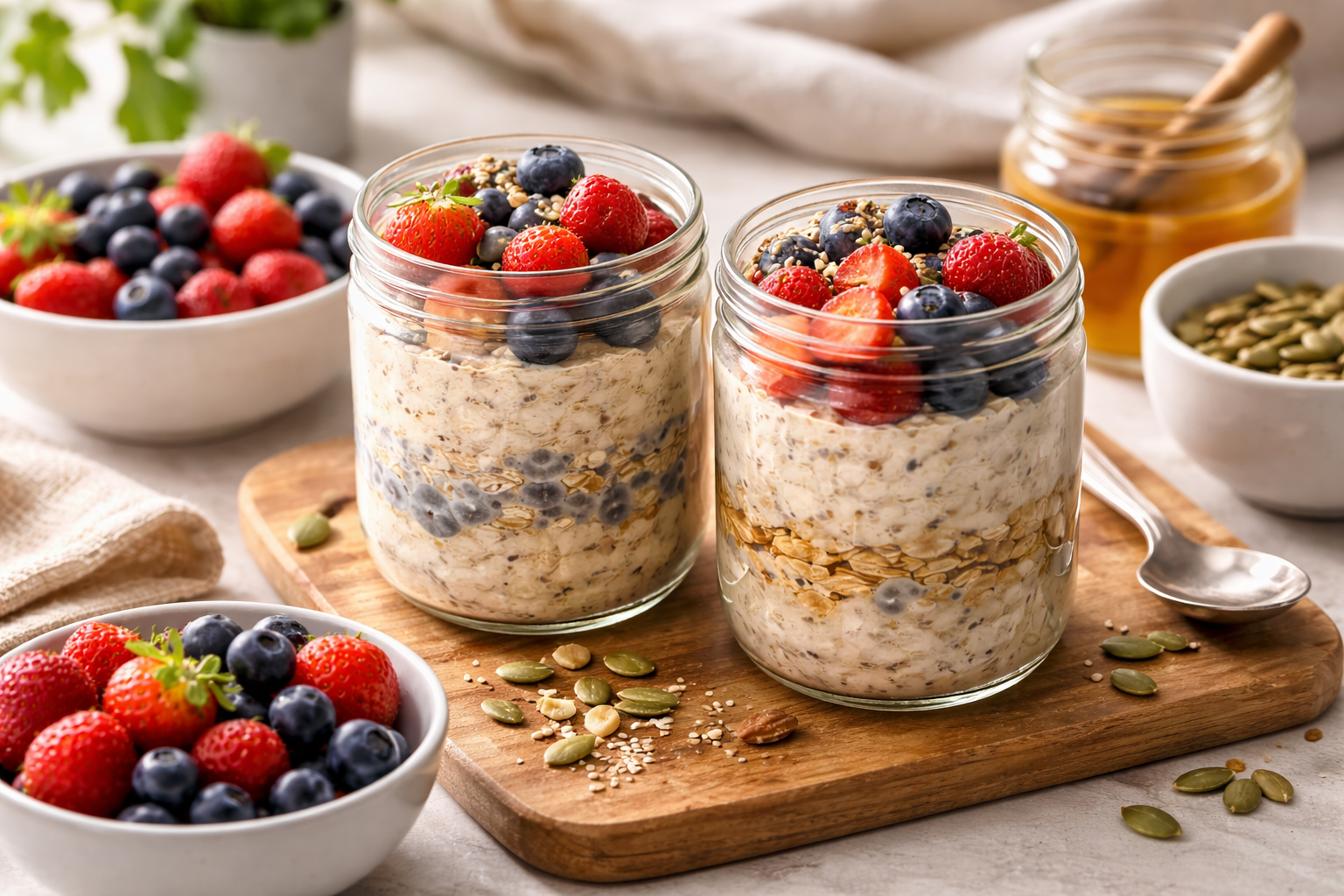
Overnight oats have earned their popularity for good reason. Combining rolled oats with milk or yoghurt the evening before creates a ready-to-eat breakfast requiring zero morning preparation. The oats absorb liquid overnight, developing a creamy texture whilst retaining their fibre content and slow-releasing carbohydrates.
A basic recipe involves mixing 40-50g rolled oats with 150ml milk (dairy or plant-based), a tablespoon of chia seeds for omega-3s, and a drizzle of honey or maple syrup. Add fresh or frozen berries in the morning for vitamins and antioxidants. This combination provides approximately 350 calories with balanced macronutrients to sustain you through the morning.
Easy Nutritious Breakfast Recipes UK Style
Toast remains a British breakfast staple, and wholegrain versions transform this simple option into a genuinely healthy choice. Top two slices of seeded wholegrain bread with mashed avocado, a poached or scrambled egg, and a sprinkle of seeds. This five-minute meal delivers protein, healthy fats, fibre, and various micronutrients in a satisfying package.
Another quick option involves Greek yoghurt parfaits. Layer 150g plain Greek yoghurt with a handful of granola (check labels for low-sugar versions), mixed berries, and a tablespoon of nut butter. The protein from yoghurt combined with fibre from fruit and wholegrain creates genuine satiety without heaviness.
High-Protein Breakfast Options to Stay Full
Protein at breakfast plays a particular role in appetite regulation. Research indicates that morning protein consumption may reduce hunger hormones and increase satiety signals, potentially preventing overeating throughout the day. For those seeking healthy breakfast ideas that genuinely last, prioritising protein makes practical sense.
Eggs: The Versatile Protein Source
Eggs offer complete protein containing all essential amino acids, making them exceptionally valuable for breakfast. Two large eggs provide approximately 12g protein alongside vitamins D, B12, and choline — a nutrient many people lack. Preparation methods matter less nutritionally than accompaniments; scrambled, poached, boiled, or as omelettes, eggs deliver similar benefits.
For maximum nutrition, pair eggs with vegetables. A simple approach involves scrambling eggs with a handful of spinach, chopped tomatoes, and mushrooms. This adds fibre, vitamins, and volume without significant calories. Season with herbs rather than excessive salt for heart-healthy flavouring.
Understanding foods that sustain energy levels helps explain why egg-based breakfasts prevent mid-morning crashes. The combination of protein and fat digests slowly, providing steady fuel rather than the rapid spike and crash associated with refined carbohydrates.
Cottage Cheese and Greek Yoghurt Options
Dairy-based proteins offer alternatives for those preferring lighter breakfasts. Greek yoghurt contains roughly double the protein of regular yoghurt — approximately 10g per 100g serving — making it a substantial breakfast foundation. Choose plain varieties and add your own flavourings to avoid hidden sugars common in flavoured products.
Cottage cheese, though perhaps less trendy, provides even more protein with fewer calories. A 150g serving delivers around 18g protein, making it exceptionally efficient for those monitoring intake carefully. Top with fresh fruit, seeds, and a drizzle of honey for a balanced meal requiring no cooking whatsoever.

Plant-Based Healthy Breakfast Ideas
Whether following a fully plant-based diet or simply seeking more variety, numerous nutritious options exist beyond traditional eggs and dairy. These healthy breakfast ideas demonstrate that plant foods can absolutely provide the protein, energy, and satisfaction needed for productive mornings.
Smoothie Bowls Done Right
Smoothie bowls offer advantages over drinkable smoothies, primarily because eating rather than drinking breakfast tends to register more effectively with appetite signals. The key lies in balancing ingredients to avoid pure fruit sugar bombs that spike blood glucose.
A well-constructed smoothie bowl starts with a protein base — silken tofu, protein powder, or nut butter. Add frozen banana for creaminess, a handful of spinach (undetectable once blended), and berries for flavour. Top with seeds, nuts, and a small amount of granola for texture and additional nutrients. This approach provides sustained energy rather than the crash following fruit-only versions.
For those interested in supporting digestive wellness, smoothie bowls offer excellent opportunities to incorporate probiotic-friendly ingredients like kefir or fibre-rich additions that support healthy gut bacteria.
Savoury Plant Options
Not everyone enjoys sweet breakfasts, and plant-based eating offers plenty of savoury alternatives. Smashed chickpeas on toast, seasoned with lemon, cumin, and fresh herbs, provides protein and fibre in a satisfying savoury format. Tofu scramble, made by crumbling firm tofu with turmeric, nutritional yeast, and vegetables, mimics scrambled eggs whilst delivering plant protein.
These options particularly suit those who find sweet breakfasts trigger further sweet cravings throughout the day. Starting savoury may help stabilise appetite patterns for some individuals, though personal preference ultimately guides the best choice.
Nutrient Combinations That Work Together
Like puzzle pieces fitting together, certain nutrients enhance each other’s absorption and effects when consumed simultaneously. Understanding these interactions helps optimise your healthy breakfast ideas for maximum nutritional benefit.
| Combination | Synergy Type | Why It Works | Evidence |
|---|---|---|---|
| Iron-Rich Foods + Vitamin C | 🔄 Absorption | Vitamin C converts plant iron to absorbable form; pair spinach with citrus | ⭐⭐⭐ |
| Fat-Soluble Vitamins + Healthy Fats | 🔄 Absorption | Vitamins A, D, E, K require fat for absorption; add avocado or nuts | ⭐⭐⭐ |
| Protein + Fibre | ⏱️ Timing | Combined slow digestion for sustained energy; eggs with wholegrain toast | ⭐⭐⭐ |
| Calcium + Vitamin D | 🔗 Cofactor | Vitamin D aids calcium absorption; fortified milk with eggs | ⭐⭐⭐ |
| Turmeric + Black Pepper | 🔄 Absorption | Piperine enhances curcumin absorption by up to 2000%; add to scrambles | ⭐⭐ |
Evidence Key: ⭐⭐⭐ Strong (multiple clinical studies) | ⭐⭐ Moderate (some evidence) | ⭐ Emerging (preliminary data)
For those interested in understanding vitamin D sources, breakfast offers practical opportunities to combine this nutrient with calcium-rich foods for optimal bone health support.
💡 Tip: Add a squeeze of lemon or orange segments to iron-rich breakfast foods like fortified cereals or spinach-based dishes to enhance iron absorption significantly.
Make-Ahead Breakfast Ideas for the Week
Batch preparation transforms healthy eating from daily effort into weekly habit. Dedicating thirty minutes on Sunday to breakfast prep can save hours throughout the week whilst ensuring nutritious options remain accessible even on the busiest mornings.
Breakfast Muffins and Egg Cups
Egg muffins involve baking whisked eggs with vegetables and optional cheese in a muffin tin. A dozen takes approximately 25 minutes to prepare and bake, providing grab-and-go breakfasts for nearly a week. Store refrigerated and reheat briefly in a microwave for a warm, protein-rich breakfast in under a minute.
Variations include Mediterranean style with sun-dried tomatoes and feta, Mexican with peppers and chorizo (or plant-based alternative), or simple combinations with whatever vegetables need using. Each muffin provides roughly 80-100 calories with 6-7g protein, making two or three a substantial breakfast.
Portioned Smoothie Packs
Pre-portioning smoothie ingredients into freezer bags eliminates morning measuring and decision-making. Combine your preferred frozen fruits, a handful of spinach, and any dry additions like protein powder or oats in individual bags. When ready, simply empty into a blender, add liquid, and blend. This approach reduces smoothie preparation to under three minutes.
Label bags with contents and dates to track freshness. Most combinations keep frozen for up to three months without significant nutrient degradation, making Sunday batch sessions genuinely worthwhile.
Healthy Breakfast Ideas for Weight Management
While no single meal determines weight outcomes, breakfast choices can influence eating patterns throughout the day. Evidence suggests that protein-rich, fibre-containing morning meals may support weight management goals by reducing hunger and preventing compensatory overeating later.
Balancing Satisfaction with Calories
Volume eating principles work particularly well at breakfast. Choosing foods with high water and fibre content provides physical fullness with relatively few calories. Vegetables in omelettes, berries in yoghurt, and leafy greens in smoothies all add bulk and nutrition without dramatically increasing energy intake.
Conversely, concentrated calories from added sugars, excessive oils, or large portions of nuts require more careful attention. These foods offer nutritional value but can easily tip energy balance when consumed mindlessly. Measuring portions initially helps calibrate visual estimates for ongoing sustainable eating.
The Protein Prioritisation Approach
Starting with protein at each meal, including breakfast, has gained research support for weight management. Protein requires more energy to digest than carbohydrates or fat, slightly boosting metabolism. More importantly, protein triggers satiety hormones effectively, potentially reducing overall daily intake without conscious restriction.
Aim for 20-30g protein at breakfast for meaningful appetite effects. This might look like three eggs (21g), Greek yoghurt with nuts (18-22g), or protein-boosted overnight oats with added protein powder (25-30g depending on type).
What to Drink with Your Morning Meal
Beverages complement breakfast choices and warrant consideration as part of your overall morning nutrition strategy. What you drink can enhance or potentially interfere with nutrient absorption and energy levels.
Water First
After overnight dehydration, plain water serves the body well before or alongside breakfast. Hydration supports digestion, nutrient transport, and cognitive function. Drinking a glass of water upon waking, before any other beverage, helps restore fluid balance efficiently.
Coffee and Tea Considerations
Caffeine in coffee and tea offers cognitive benefits for many people, but timing matters. Drinking coffee with or immediately after meals containing iron may reduce iron absorption by up to 39%. Those prioritising iron intake might consider waiting 30-60 minutes after eating before enjoying their coffee.
Green tea provides gentler caffeine alongside antioxidants. Herbal teas offer variety without caffeine for those sensitive to its effects. Black tea falls between coffee and green tea for caffeine content and similarly may affect iron absorption if consumed with meals.
Juice: Not Always the Best Choice
Fruit juice, though containing vitamins, delivers concentrated fruit sugars without the fibre that slows absorption in whole fruit. A glass of orange juice contains similar sugar to a fizzy drink, though with added vitamin C. For most people, eating whole fruit and drinking water represents a more balanced approach than relying on juice for morning fruit intake.
Evidence Snapshot
| Claim | Evidence Level | Summary |
|---|---|---|
| Protein at breakfast reduces later hunger | Strong | Multiple studies show protein increases satiety hormones and reduces appetite |
| Fibre slows glucose absorption | Strong | Wholegrains and fibre-rich foods prevent blood sugar spikes after eating |
| Vitamin C enhances iron absorption | Strong | Well-established mechanism; pairing improves non-haem iron bioavailability |
| Breakfast improves cognitive performance | Moderate | Some evidence for improved concentration; effects vary by individual |
| Skipping breakfast causes weight gain | Emerging | Mixed evidence; individual responses vary significantly |
| Coffee interferes with iron absorption | Strong | Polyphenols in coffee reduce iron absorption; spacing helps |
🩺 Expert Note
While breakfast can support overall nutrition goals, individual needs vary considerably. Those with specific health conditions, taking medications that affect nutrient absorption, or following therapeutic diets should consult a registered dietitian for personalised guidance. The best breakfast is ultimately one you enjoy and can maintain consistently.
Safety Considerations and Dietary Notes
Most healthy breakfast ideas suit the general population, but certain considerations apply to specific groups. Being aware of potential concerns helps you make choices aligned with your individual health circumstances.
Allergy and Intolerance Considerations
Common breakfast allergens include eggs, dairy, nuts, wheat, and soya. Those with diagnosed allergies should carefully read labels on prepared foods and choose naturally allergen-free options appropriate to their needs. Many healthy breakfast ideas adapt easily — oat-based recipes work for those avoiding wheat, while plant milks substitute for dairy in most applications.
Medication Interactions
Certain breakfast foods may interact with medications. Grapefruit and grapefruit juice affect numerous drug metabolisms and should be avoided by those taking affected medications. High-vitamin-K foods like spinach require consistency (not avoidance) for those on warfarin. Consult your pharmacist about specific food-drug interactions relevant to your prescriptions.
| Consideration | Risk Level | Details | Recommendation |
|---|---|---|---|
| High-sugar cereals | MODERATE | Blood sugar spikes; energy crashes | Choose wholegrain, low-sugar options |
| Grapefruit with medications | HIGH | Affects drug metabolism significantly | Check with pharmacist; avoid if advised |
| Raw eggs | MODERATE | Salmonella risk in smoothies or shakes | Use pasteurised eggs or Lion-marked UK eggs |
| Excessive fibre increase | LOW | Digestive discomfort if increased too quickly | Increase fibre gradually over weeks |
| Caffeine sensitivity | LOW | Anxiety, sleep issues in sensitive individuals | Know your tolerance; consider decaf |
⚠️ Important: Those with diabetes, eating disorders, or other conditions affecting food choices should work with healthcare professionals to determine appropriate breakfast patterns. General advice may not apply to all circumstances.
Frequently Asked Questions
What is the healthiest breakfast to eat every day?
The healthiest daily breakfast combines protein, complex carbohydrates, healthy fats, and fibre. A practical example includes eggs with wholegrain toast and avocado, or Greek yoghurt with oats, nuts, and berries. Variety matters too — rotating options throughout the week ensures diverse nutrient intake. The best breakfast is one you genuinely enjoy and can sustain long-term, as consistency matters more than perfection for lasting health benefits.
Is it better to eat breakfast or skip it for weight loss?
Research on breakfast and weight loss shows mixed results, suggesting individual differences matter significantly. Some people thrive on morning eating, experiencing better appetite control throughout the day. Others practice intermittent fasting successfully without breakfast. Rather than following blanket rules, observe how breakfast affects your own hunger, energy, and overall food intake. If skipping leads to later overeating, regular breakfast may help; if you genuinely feel fine without it, forcing food may not benefit weight goals.
How can I make healthy breakfasts quickly on busy mornings?
Preparation is the key to quick healthy breakfasts. Overnight oats require zero morning effort. Egg muffins made in advance reheat in sixty seconds. Pre-portioned smoothie bags need only liquid and blending. Even without preparation, options like wholegrain toast with nut butter, yoghurt with fruit, or quality muesli with milk take under five minutes. Setting out ingredients the night before, even just grabbing the pan, reduces morning friction significantly.
What breakfast foods give you the most energy?
Sustained energy comes from balanced meals rather than single magic foods. Complex carbohydrates (oats, wholegrain bread) provide steady glucose release. Protein (eggs, yoghurt, nuts) maintains energy through slower digestion. Healthy fats (avocado, nut butter, seeds) extend satiety and energy availability. Combining these elements outperforms any single food. Conversely, refined sugars and simple carbohydrates alone cause rapid energy spikes followed by crashes, leaving you tired mid-morning despite eating.
Are smoothies a good healthy breakfast option?
Smoothies can be excellent or problematic depending on construction. Balanced smoothies including protein (Greek yoghurt, protein powder, nut butter), fibre (vegetables, oats, chia seeds), and moderate fruit provide genuine nutrition. Fruit-only smoothies essentially deliver liquid sugar, spiking blood glucose and hunger. Drinking rather than chewing also affects satiety signals for some people. For best results, include protein and fibre, limit fruit to one or two portions, add vegetables, and consider smoothie bowls eaten with a spoon rather than drunk.
What should I avoid eating for breakfast?
Highly processed, sugar-laden options provide little nutrition while potentially disrupting appetite and energy. Sugary cereals, pastries, sweetened flavoured yoghurts, and fruit juices represent common breakfast choices that may leave you hungry and tired by mid-morning. Processed meats like bacon and sausages, while providing protein, contain high sodium and saturated fat when eaten regularly. This does not mean never enjoying these foods — occasional treats fit within balanced eating — but they work poorly as daily staples for health-focused individuals.
Final Thoughts
Healthy breakfast ideas need not be complicated, expensive, or time-consuming. The fifteen options explored throughout this guide demonstrate that nutritious morning eating adapts to virtually any lifestyle, preference, or constraint. From five-minute toast combinations to make-ahead meal prep, solutions exist for even the busiest schedules.
The fundamental principles remain consistent: combine protein for satiety, complex carbohydrates for energy, healthy fats for nutrient absorption, and fibre for digestive health and blood sugar stability. Within this framework, endless variations allow personal preference to guide specific choices. Whether you favour sweet or savoury, quick or leisurely, traditional or creative, balanced options abound.
Remember that sustainable habits outweigh perfection. A good-enough breakfast eaten consistently delivers more benefit than an optimal one managed sporadically. Start with changes that feel manageable, build upon successes, and gradually expand your repertoire. For further guidance on building sustainable eating habits, consistent small improvements compound into significant long-term health benefits.
Most importantly, pay attention to how different breakfasts make you feel. Personal response varies considerably — the best healthy breakfast ideas for you are ultimately those supporting your energy, concentration, and wellbeing throughout the morning and beyond.
Sources
- NHS — Healthy Breakfast Information
- NIH Office of Dietary Supplements — Nutrient Fact Sheets
- PubMed — Breakfast and Nutrition Research
- Mayo Clinic — Breakfast Guidance
- Harvard Health — Healthy Breakfast Articles
- Examine — Breakfast Evidence Summary
- Cleveland Clinic — Breakfast Nutrition
Written by Arsim Rama
Health Content Specialist · 5+ years in nutrition research
Arsim Rama specialises in translating complex nutrition science into practical, evidence-based guidance. His work focuses on supplement safety, efficacy, and helping readers make informed health decisions.
🩺 Medically Reviewed By: Mavran Todl, Clinical Nutrition Specialist
Last medical review:
Affiliate Disclosure: This article may contain affiliate links. If you purchase through these links, we may earn a small commission at no extra cost to you. We only recommend products we genuinely believe in and have researched thoroughly.
Medical Disclaimer: This article is for educational purposes only and does not constitute medical advice. Always consult your GP or qualified healthcare professional before making changes to your health regimen, especially if you take medications or have existing health conditions.
© 2026 Paulinna. All rights reserved.